
High-Speed Fabric Doors in Ohio
Fast & Industrial Solutions for Warehouses, Production Floors, Cold Storage & More.
Fast & Industrial Solutions for Warehouses, Production Floors, Cold Storage & More.
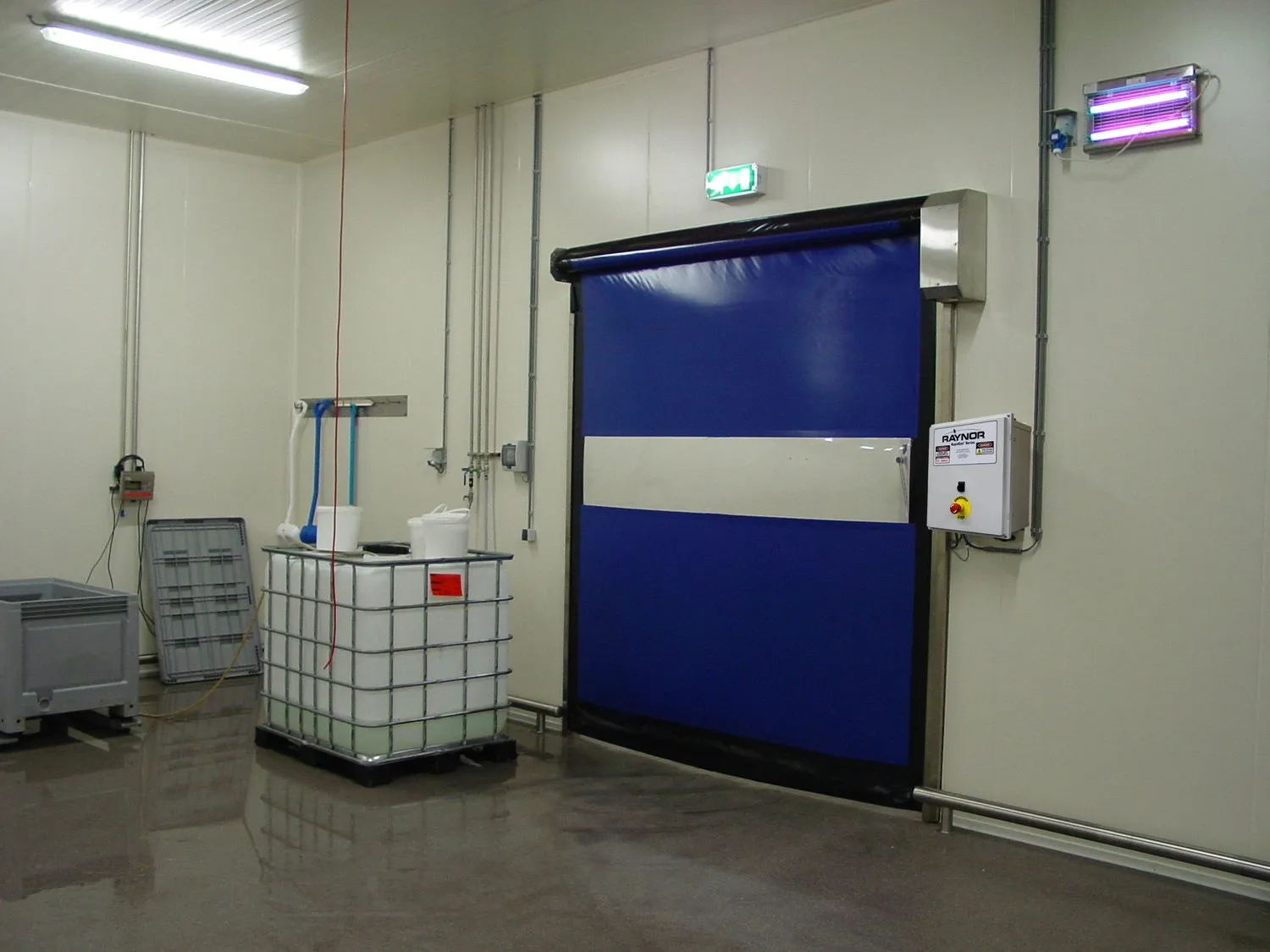
Every minute your door takes is a minute your business loses. In a busy warehouse or cold storage facility, a slow door isn’t just an inconvenience; it’s a measurable drain on productivity.
✓ Licensed & Insured
✓ Same-Day Assessment
✓ Multi-Brand Service
✓ Safety System Integration
Quick Answer
High-speed fabric doors, also called rapid roll doors or fast-acting doors, are motorized roll-up doors built for environments where speed, durability, and thermal performance all matter at once. Unlike traditional rolling steel door systems, they use flexible fabric curtains, typically reinforced PVC, that roll up and down at speeds of 100 inches per second or more.
They’re engineered for high-traffic environments that see hundreds of cycles daily. Unlike traditional commercial high-speed doors, they’re designed with features that eliminate the most common failure points, including springs, cables, and motor brakes.
The Problem
Most standard roll-up or sectional doors simply aren’t built for the punishment of industrial use. A typical commercial garage door might be rated for 10,000 to 20,000 cycles over its lifetime. In a busy warehouse or manufacturing facility, you can hit that in under a year.
Fast-acting doors built for industrial applications are rated for hundreds of thousands of cycles. They self-diagnose when something goes wrong, so you’re never left guessing. If you’ve had ongoing repair issues, review our repair service. In many cases, ongoing repair costs exceed the investment in upgrading to a high-speed system.
Where They Work Best
High-speed roll-up doors aren’t just for any industrial setting; they’re particularly impactful in specific environments where door traffic is dense and environmental separation matters. If you’re comparing different commercial door options, our guide explains where each style performs best.
01
Every second of cycle time adds up across a shift. Forklifts moving product between temperature zones, staging areas, and shipping docks benefit enormously from warehouse speed doors that open instantly and close completely between passes.
02
Fast roll-up doors are one of the most requested solutions from manufacturing facility managers. These environments need containment, dust, noise, temperature, and air pressure differences between zones, without creating a traffic bottleneck.
03
Cooler doors cycle constantly in condensation and ice. Standard doors in cooler applications fail early and often. Industrial high-speed fabric doors built for cold storage maintain performance even in sub-zero environments with minimal temperature bleed between zones.
04
High-speed garage doors are a standard feature in modern automotive assembly environments. Paint booths, assembly lines, and parts storage areas all benefit from the combination of speed, cleanliness, and durability these doors provide.
The Technology
What makes these doors different isn’t just their speed; it’s what they’ve removed from the equation. Traditional high-speed roll-up doors rely on springs, cables, counterbalances, and motor brakes. Each of those components wears out. Each one is a potential failure point.
Modern High-Speed Industrial Doors are engineered without most of those components. The flexible fabric curtain absorbs impacts, including forklift strikes, without breaking or going off-track. In many designs, the curtain self-reinserts into the guides automatically without any technician involvement.
Energy-efficient industrial doors in this category also include brush seals along the side guides and bottom edge seals that compress tightly when closed, keeping conditioned air in and outdoor air out, even in Marion’s harshest winters.
Energy Savings
One of the most compelling arguments for upgrading to energy-efficient industrial doors isn’t productivity; it’s utility cost. Every time a door opens and stays open for 15–30 seconds, as traditional doors often do, your HVAC system is fighting to maintain the temperature of that space.
Multiply that by hundreds of cycles per day, and you’re looking at a significant and quantifiable energy loss. High-speed fabric doors open and close in under three seconds in most applications, dramatically reducing the time your climate-controlled air is exposed to the exterior or adjacent zones.
For cold storage operations, especially, the ROI on energy savings alone often justifies the upgrade within the first year or two. Dig deeper into insulation performance standards on our blog
Our Process
The Door Guys have been installing industrial doors Ohio-wide since 1996. Installing commercial high-speed doors isn’t a simple swap-out. Learn what affects fast-cycling fabric door installation costs before planning your project.
Most industrial-grade high-speed roll-up doors open at 80–150 inches per second, depending on the model and application. That translates to a full open in about 2–3 seconds for standard door heights.
Most modern high-speed fabric doors are designed to handle impact. The curtain dislodges from the guides rather than breaking, and in many designs, it self-reinserts automatically without any technician involvement.
Yes. We handle full integration with loop detectors, proximity sensors, photo eyes, and access control systems as part of the installation scope, at no surprise cost.
In most cases, yes. Our technicians are trained on multiple brands and configurations of commercial high-speed doors and fast-acting doors. Call us to confirm compatibility with your existing system. Speak with our high-speed door experts to find the right solution for your facility.
Some models are rated for outdoor use, but most high-speed roll-up doors are designed for interior applications between zones. We’ll spec the right door for your exact application during our site assessment.
High-speed doors typically have a higher upfront cost. However, reduced maintenance frequency, lower energy loss, and productivity gains generally result in a lower total cost of ownership over 5–10 years in high-cycle environments.
If your facility runs high-traffic door cycles every day, you’re leaving productivity and energy savings on the table. The Door Guys have been solving industrial door challenges in Marion, Ohio, and across Central Ohio since 1996.