
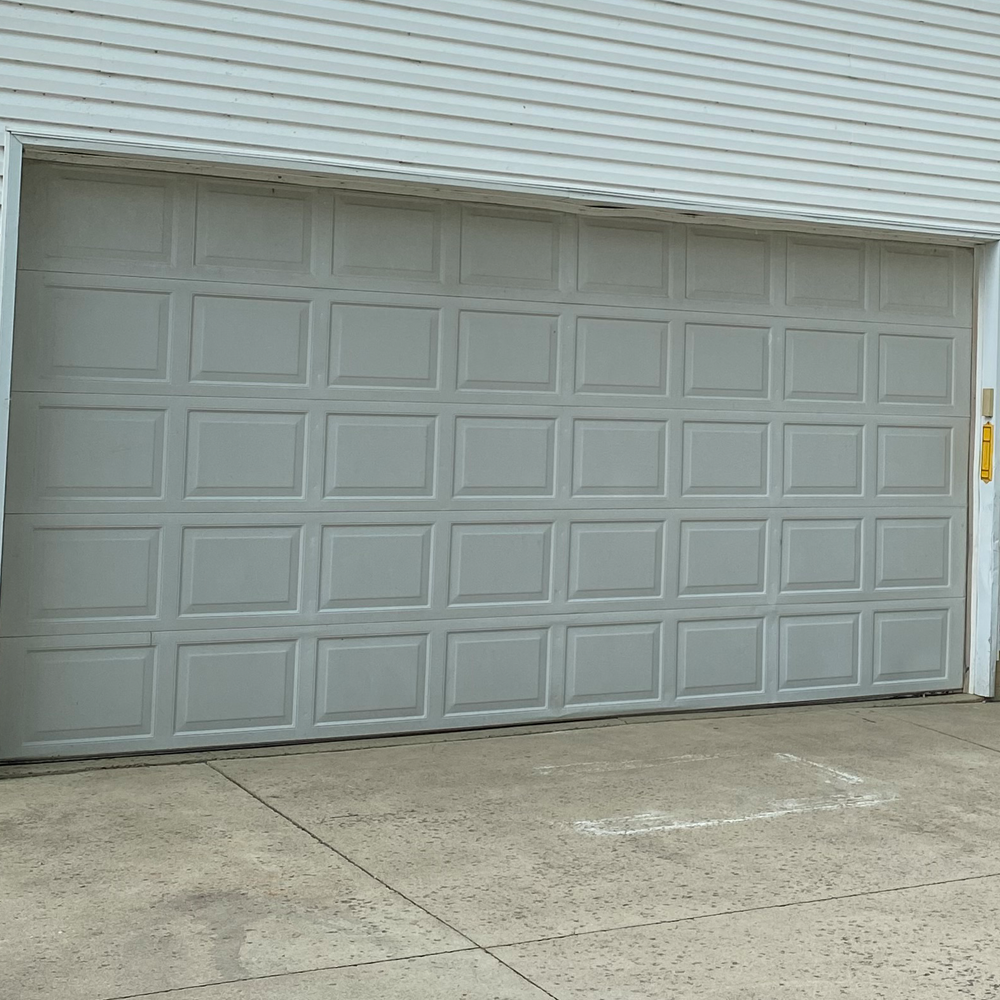
You hit the remote button. The door groans, lifts three inches, then stops cold. You hit it again. Nothing. Before you assume your opener is dying, here’s something most homeowners don’t know: in the majority of cases like this, the opener is completely fine. The real problem is hiding overhead in the springs.
After working with Central Ohio homeowners for nearly three decades, we’ve seen this scenario more times than we can count. Spring problems are almost always the culprit, and they almost always give clear warning signs before total failure. The trouble is, most people don’t recognize those signs until it’s too late. This guide is for homeowners who want to understand what’s actually happening with their garage door spring system, what breaks, why it breaks, how to spot trouble early, and when it’s time to stop DIY-ing and make a call.
Quick Answer
Garage door springs counterbalance the full weight of the door. When they weaken, crack, or snap, the door becomes difficult or impossible to operate safely. Warning signs include a door that feels unusually heavy, moves unevenly, stops mid-travel, or produces a loud bang. Because springs operate under extreme mechanical tension, broken spring repair should be handled by a trained technician, not treated as a weekend project.
Why Your Springs Matter More Than Your Opener
Here’s a common misconception worth clearing up right away. Your garage door opener does not lift the door. Your springs do.
The opener’s job is to trigger the movement and guide it. The spring system, whether torsion or extension, does the actual heavy lifting by storing and releasing mechanical energy. A properly tensioned spring makes even a 200-pound door feel light. When that tension is gone, one of two things happens: the door becomes dangerously heavy, or the opener strains itself trying to compensate until it eventually fails too.
This is why catching spring problems early matters so much. One worn spring can quietly damage cables, rollers, tracks, hinges, and your opener over time. What could’ve been a simple repair turns into a full system job.
7 Warning Signs Your Garage Door Springs Need Attention
Spring systems rarely fail without notice. Here are the signs we hear about most often from homeowners before complete failure occurs.
1. The Door Feels Unusually Heavy When Opened Manually
Try this: disconnect the opener and lift the door by hand. A balanced door should glide up smoothly and stay open on its own around waist height. If it feels like you’re lifting deadweight, or if it drops the moment you let go, spring tension has likely dropped significantly. This is often the first sign and the one most homeowners ignore for weeks.
2. A Loud Bang Came From the Garage (With No Obvious Cause)
One homeowner in Marion described it as sounding like a gunshot from inside the garage. No intruder. No fallen shelf. No visible damage.
What happened was a torsion spring snapping under full tension. The release of stored energy creates a sharp, explosive sound that can genuinely startle people in nearby rooms. If you’ve heard this and haven’t investigated, check your spring immediately.
3. The Door Opens Unevenly. One Side Rises Faster Than the Other
This lopsided movement is a clear sign that spring tension has become unbalanced. It puts asymmetric stress on your cables, rollers, and tracks with every cycle. Left alone, it usually leads to a bent track or snapped cable on top of the original spring issue.
4. The Door Stops Halfway and Won’t Continue
Most homeowners blame the opener for this. Sometimes that’s right, but very often, the opener is hitting a built-in load limit that’s designed to prevent motor damage. Weak springs create enough resistance that the opener simply gives up partway through the movement. If your opener’s limit settings haven’t changed and the door suddenly starts stopping mid-travel, spring tension is the first thing to check.
5. There’s a Visible Gap in the Torsion Spring
Walk to the front of your garage and look at the horizontal metal bar above the door opening. Torsion springs wrap around this bar. If you see a gap, even a small one, in the coil, the spring is broken, and the door should not be operated until it’s repaired.
6. The Door Shakes or Jerks During Movement
Smooth, controlled movement is what a properly tensioned spring system looks like. If your door vibrates, shudders, or moves in stuttering intervals, it’s often a sign of uneven tension or a spring that’s starting to fail in sections.
7. Your Opener Has Started Sounding Strained or Labored
Motors have a distinct sound when they’re working harder than they should. If your opener suddenly sounds louder or more labored than it used to, the spring system may be failing to carry its share of the load, and your opener is making up the difference at a cost to its own lifespan.
Torsion Springs vs. Extension Springs: What’s the Difference?
Not all residential garage doors use the same spring system, and the difference matters when it comes to repair and longevity. Torsion springs are mounted horizontally above the door opening. They work by twisting (torquing) to store energy, then releasing it in a controlled way as the door moves. They’re the standard in most newer residential installations because they last longer, operate more quietly, and handle heavier doors more reliably.
Extension springs run along the horizontal tracks on either side of the door. They stretch to store energy rather than twist. They’re common in older homes and typically have more components that can wear independently, meaning more potential failure points over time. If your home has extension springs and you’re already looking at a repair, it’s worth asking your technician about whether upgrading to a torsion system makes sense for your door’s weight and usage.
For a deeper breakdown of how lifespan compares between the two systems and what affects cycle count, our guide on how long garage door springs last covers that in detail.
Why Ohio Winters Are Hard on Garage Door Springs
This is something a lot of homeowners don’t consider until they’re standing in a cold garage with a door that won’t budge. Metal contracts in cold temperatures. For garage door springs, which are already under significant tension, repeated expansion and contraction through Ohio’s winter temperature swings accelerate wear in ways that warmer climates simply don’t experience as severely.
Springs on doors that serve as the home’s primary entrance take the hardest hit. Four to six cycles per day add up fast, especially when cold weather is making the metal more brittle. If your springs are already aging, late fall is genuinely the best time to have them inspected before you’re dealing with a failure on a 10-degree morning.
Can You Use the Door With a Broken Spring?
Technically, sometimes. Practically, it’s a bad idea. A broken spring throws off the entire balance of the door system. The opener, if it runs at all, is now working well outside its design load. Cables can snap. Tracks can bend. In a worst-case scenario, a door under that kind of imbalanced tension can drop suddenly and unpredictably.
Our recommendation: if you suspect or confirm a broken spring, use the door as little as possible and get it evaluated quickly. Emergency manual use in situations where you genuinely have no alternative is one thing; routine operation is another.
The Case Against DIY Spring Repair
We understand the impulse. There are videos online that make garage spring replacement look manageable. And for someone mechanically confident, it might even be tempting. Here’s the honest reality: torsion springs in particular are under hundreds of pounds of tension. When something goes wrong during a DIY repair attempt, a tool slips, or a winding bar releases unexpectedly, the consequences can be serious. Extension springs are somewhat more forgiving, but they still carry significant stored energy.
Beyond safety, there’s a practical issue: replacing just the spring that visibly failed, without inspecting cables, drums, bearings, and the door’s overall balance, often means you’re back in the same situation within months. A trained technician doesn’t just swap the broken part. They evaluate the whole system, check whether the remaining hardware can handle a new spring, and make sure the door leaves in a balanced, safe working condition.
A Real Example From a Marion Service Call
A homeowner contacted us after noticing the garage door felt heavier than usual for about three weeks. The opener was still working, so she assumed it was fine and kept using it. By the time we arrived, the original spring issue had caused the cable on one side to fray badly, and the opener’s drive gear was showing wear from carrying a load it wasn’t designed for. A spring replacement had become a spring replacement plus cable repair plus opener inspection. Not because she did anything wrong, just because the warning signs got missed. That pattern is more common than most homeowners would guess.
When to Stop Waiting and Make the Call
Here’s a simple rule of thumb we tell homeowners: If the door feels wrong, sounds wrong, or moves wrong, and it didn’t used to don’t wait for it to fail. One inspection call now almost always costs far less than the repair bill after total failure. At The Door Guys, we’ve been serving Marion and Central Ohio since 1996. Our team handles everything from routine garage maintenance inspections to emergency broken spring repair, same day when possible.
Frequently Asked Questions
Q.1 Why does my garage door feel so heavy all of a sudden?
A sudden change in door weight almost always points to a spring losing tension or breaking. The springs carry the mechanical load of the door. When they fail, you’re left lifting the full weight yourself or forcing the opener to compensate.
Q.2 How do I know if my garage door spring is broken without touching it?
Look above the door opening for a visible gap in the torsion spring coil. Also listen for unusual sounds, watch for lopsided movement, and test the door manually by disconnecting the opener. A door that won’t stay open on its own or feels extremely heavy has a strong chance of spring failure.
Q.3 Is it safe to use the garage door if I think a spring is broken?
Routine use isn’t recommended. An imbalanced door puts strain on cables, tracks, and the opener. In some cases, it can drop without warning. Limit use to genuine emergencies and schedule a repair as soon as possible.
Q.4 Why do garage door springs fail more often in winter?
Cold temperatures cause metal to contract, making springs more brittle and less able to handle the tension they’re carrying. Ohio’s freeze-thaw cycles are particularly rough on aging spring systems, especially on doors used multiple times daily.
Q.5 Should I replace both springs even if only one broke?
In most cases, yes, and a good technician will explain why. If one spring has reached the end of its service life, the other is likely close behind. Replacing both at once means the door stays balanced and you avoid a second service call within months.
Q.6 What’s the difference between torsion and extension spring repair in terms of complexity?
Both require specialized tools and knowledge of how spring tension works. Torsion spring repair involves winding bars and precise torque calculation. Extension spring repair involves removing and reattaching stretch springs under load. Neither is a safe beginner project; the risks of improper tension setting go well beyond just damaging the door.
About The Door Guys
The Door Guys has been Central Ohio’s trusted garage door team since 1996. We provide residential repair, installation, and emergency service across Marion and the surrounding communities. Free estimates available. Call or visit us to schedule your inspection today.
