
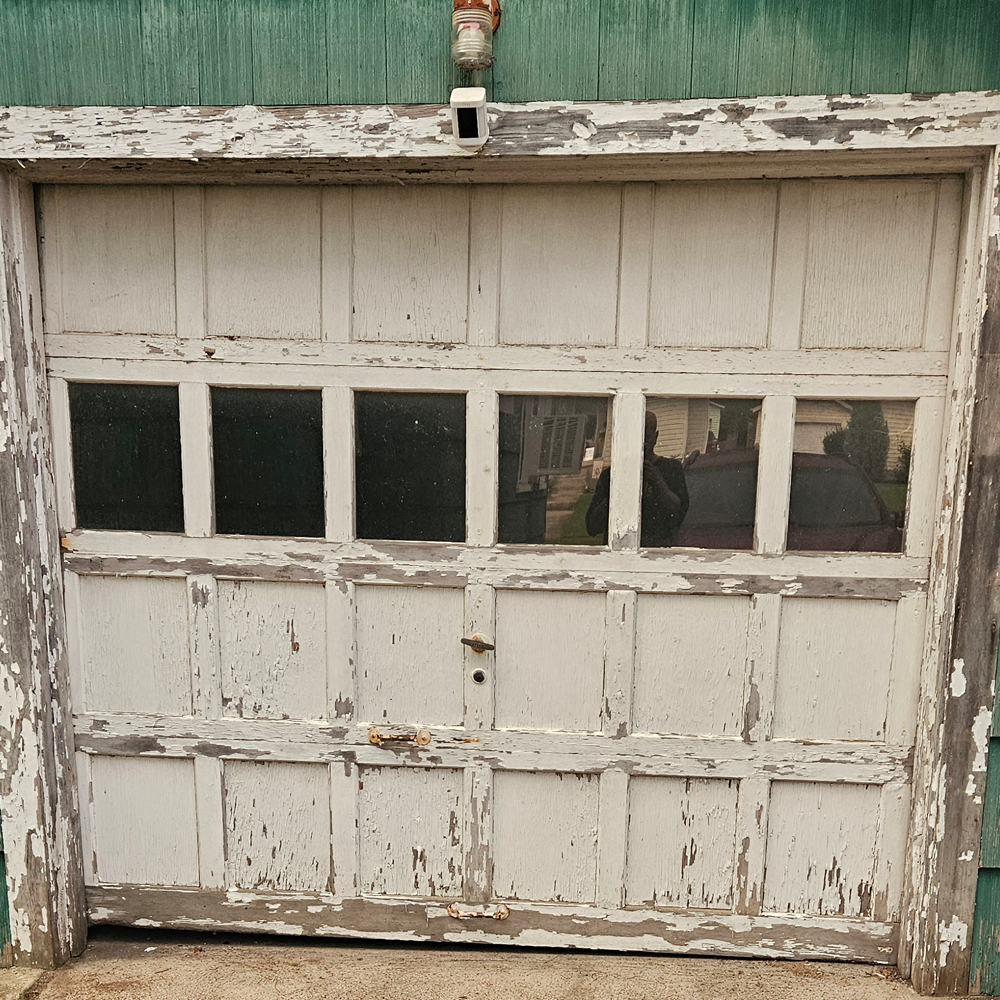
You usually don’t wake up one morning needing emergency garage door repair. It starts quietly. The door sounds a little different. It hesitates for half a second before moving. The opener takes a moment longer than it used to. The door feels heavier when you lift it manually.
Then life happens, nothing gets checked, and three weeks later, the door refuses to open while you’re already running late. We’ve watched this pattern play out across Central Ohio more times than we can count. After nearly three decades of servicing residential garage doors, one truth holds consistently: most major failures begin as minor warning signs that homeowners brush aside. If you’re searching for garage door repair in Ohio, this guide walks you through exactly what those early signals mean, which problems are most common here, and when it’s time to stop waiting and make the call.
The most common garage door problems in Ohio include worn or broken springs, opener failures that may require garage door opener repair, doors that come off track, grinding noises, and sensors that fall out of alignment. Ohio’s freeze-thaw cycles and humidity swings accelerate wear on springs, rollers, and hardware faster than many homeowners expect. Catching these issues early almost always means a simpler fix. Ignoring them often leads to emergency repairs at the worst possible time.
Why Ohio Homes Are Harder on Garage Doors Than Most People Realize
The weather here doesn’t do garage doors any favors. Central Ohio homeowners deal with temperature swings that can shift 40 to 50 degrees within a single day during transitional seasons. Add high summer humidity, winter freeze-thaw cycles, and occasional ice storms, and your garage system is quietly working harder than you’d expect year-round.
Here’s what that stress actually does over time:
- Springs lose tension faster when they’re constantly contracting and expanding through temperature extremes
- Metal tracks shift gradually as surrounding materials expand and contract with heat and cold
- Rollers wear unevenly when tracks aren’t perfectly aligned, creating friction that builds up with every cycle
- Lubricants dry out or thin depending on seasonal temperatures, leaving moving parts unprotected
- Wood panels absorb moisture and warp, throwing off the balance of the entire door
This is why so many Ohio homeowners find themselves searching for garage door service near me right after a cold snap or a stretch of humid summer weather. The weather didn’t break the door; it just pushed a slow problem to the tipping point.
The 5 Most Common Garage Door Problems in Ohio
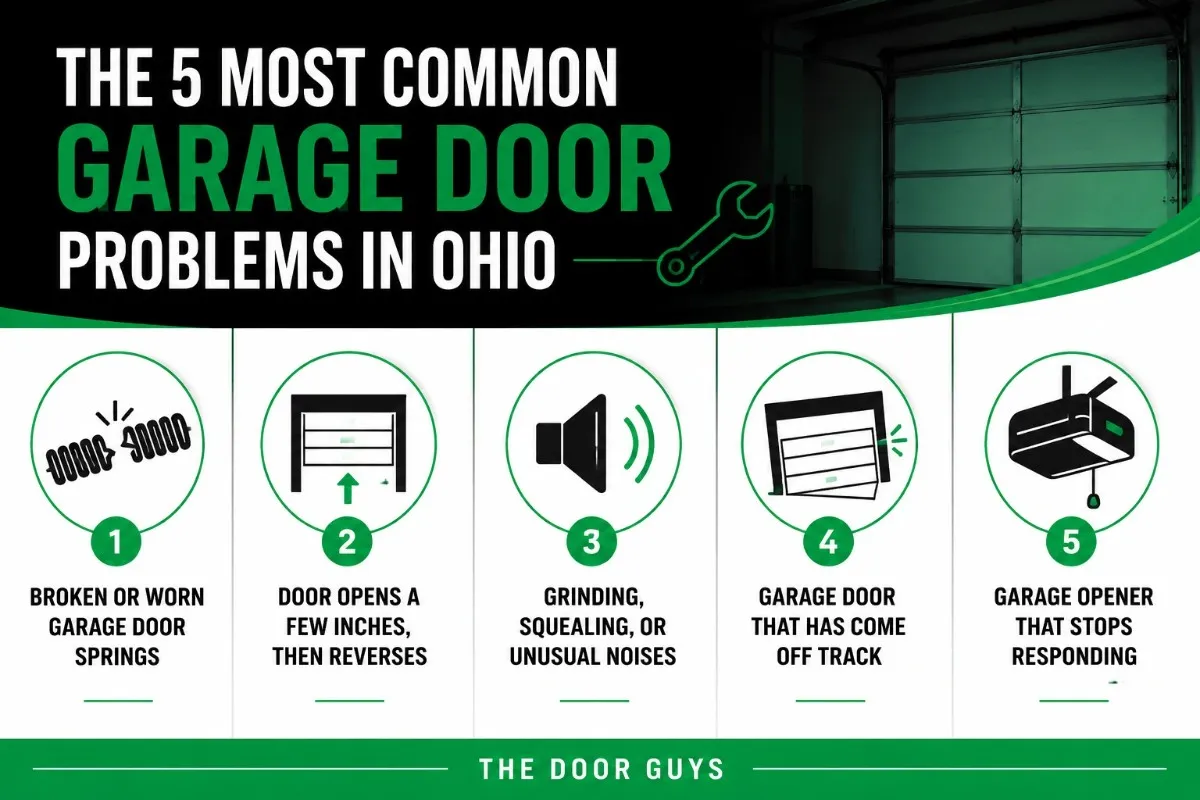
1. Broken or Worn Garage Door Springs
Springs are the workhorses of any garage door system. They carry the majority of the door’s weight during every open and close cycle. When they begin to wear out, the change is gradual at first, then sudden, and homeowners may even mistake the issue for a lift master opener humming but not opening when the real problem is a failing spring.
Watch for these signs:
- The door suddenly feels much heavier when lifted manually
- A loud snap or bang comes from the garage (often mistaken for something falling)
- The door opens only a few inches before stopping
- The door moves unevenly or looks crooked while operating
- The opener runs, but the door barely moves
Many homeowners assume the opener has failed when they hear or notice these symptoms. Springs are usually the real answer. Because a failing spring can make the door unsafe to operate, this is one of the situations where same-day garage repair genuinely matters. In many cases, technicians will also inspect related components, including the cables, since garage door cable repair may be needed if worn or damaged cables have been affected by the failing spring. Operating a door with a damaged spring puts unnecessary strain on every other component in the system.
2. Garage Door Opens a Few Inches, Then Reverses
This is one of the most searched garage door problems right now, and it has a surprisingly wide range of possible causes.
Common reasons a garage door reverses after opening partway:
- Safety sensors are slightly out of alignment
- The opener’s travel limit settings have drifted and need adjustment
- Spring tension is off, creating resistance that the opener interprets as an obstruction
- Something in the track is creating friction
- An actual obstruction (sometimes invisible, like a small piece of debris) is triggering the sensor
- Opener logic has lost its calibration after a power interruption
Homeowners often replace the remote batteries or assume the motor is failing. In most cases, neither is true. The fix is often simpler than expected, but it does require knowing exactly where to look.
3. Grinding, Squealing, or Unusual Noises During Operation
Garage doors aren’t silent. A certain amount of mechanical sound is completely normal during operation. Grinding is different. Squealing is different. A new metallic scraping sound that wasn’t there last month is different.
What those sounds typically indicate:
- Grinding: Rollers are worn down or moving through a track that’s out of alignment
- Squealing or squeaking: Moving components need lubrication, a common result of Ohio winters drying out protective coatings
- Banging or rattling: Hardware has loosened over time and is shifting during operation
- Scraping: A panel may be making contact with the track or an adjacent panel
The mistake most homeowners make is assuming sound alone isn’t a real problem. Unusual noises almost always appear weeks before a mechanical failure. They’re the door’s way of announcing that something needs attention.
4. Garage Door That Has Come Off Track
An off-track garage door is not a DIY adjustment. It’s a safety issue that needs professional attention.
Signs your door may be off track:
- The door looks visibly uneven when partially open
- You can see gaps between the rollers and the track
- The door moves with a jerky or lurching motion
- One side of the door appears to be lower than the other
- The door shakes noticeably during operation
Attempting to force an off-track door back into place without the right tools and experience can result in a more serious failure, damage to the door itself, or a safety risk to anyone nearby.
5. Garage Opener That Stops Responding
Not every opener problem means you need a new opener.
Frequent causes of opener failure that don’t require full replacement:
- Sensor alignment has shifted and is preventing the opener from completing its cycle
- An electrical issue in the outlet or circuit, not the opener itself
- The opener’s travel limits need to be reset, a common issue after power outages
- Internal gears have worn, which is a component repair rather than a system replacement
- The motor capacitor is failing, which is a small internal fix
A proper inspection usually identifies the actual source of the problem clearly. Many common garage door problems are caused by a single faulty component, so replacing the full opener when only one part has failed is one of the more common unnecessary expenses in residential garage repair.
Warning Signs Ohio Homeowners Miss Most Often
The calls we receive most often for emergency garage door repair follow a consistent pattern: homeowners noticed something weeks earlier and assumed it wasn’t serious.
Here are the early signals worth paying attention to:
✓ The door shakes or vibrates more than it used to during operation
✓ There’s a delay between pressing the remote and the door moving
✓ You’ve heard a new sound in the last few weeks that wasn’t there before
✓ The door moves unevenly; one side appears to move faster or slower
✓ The door closes faster than normal. This can indicate a spring or balance issue
✓ The opener seems to work harder than it used to
✓ The door occasionally reverses for no obvious reason
✓ The manual lift feels much heavier than it did previously
None of these automatically means a major repair. But each one is a reason to have the system looked at rather than waiting to find out what happens next, especially if it could eventually require garage door emergency repair instead of a simple fix.
What Actually Counts as a Garage Door Emergency?
Not every repair situation needs the same-day service. But some do.
Real emergency garage door repair situations include:
- The door is stuck open and can’t be secured, creating a security or weather exposure risk
- A broken spring is preventing the door from operating at all
- A vehicle is trapped inside because the door won’t open
- The door is hanging unevenly in a way that creates a structural or safety risk
- The door has come off track and cannot be safely operated
If any of these apply, waiting is the wrong call. An open garage overnight is a security issue. A hanging door is a safety issue.
Should You Repair or Replace Your Garage Door?
This is the question homeowners ask most when facing a significant repair, and it’s the right one.
Repair tends to make more sense when:
- A single component has failed while the rest of the door and hardware remain in solid condition
- The door structure itself is undamaged
- The system is relatively recent and has operated reliably
- The failure is isolated to one part of the system
Replacement becomes worth considering when:
- The same components are failing repeatedly in a short window of time
- Structural damage to the door itself affects how it seals or operates
- Multiple parts of the system are worn simultaneously
- The door is old enough that finding replacement parts is becoming difficult
There’s no single answer that applies to every situation. A proper inspection gives you the information you need to make that call without guessing.
A Real Example From Marion, Ohio
A few months ago, a homeowner near Marion reached out after their garage door started pausing briefly during the opening cycle. Nothing dramatic, just a slight hesitation before it continued moving. At first, they wondered if it might be a garage door remote repair issue, but a closer inspection revealed the hesitation was actually caused by a worn spring beginning to lose tension.
They figured it wasn’t serious enough to call anyone about. Six weeks later, during a cold stretch in January, the door stopped moving entirely. They were stuck. When we inspected the system, we found worn rollers creating intermittent track resistance, springs showing early fatigue, and a track section that had shifted slightly due to the cold. The hesitation wasn’t random. It was the system signaling that something needed attention.
The repair was straightforward. But because it had gone unaddressed through a full cold cycle, a couple of components had deteriorated further than they would have with earlier intervention. This is the pattern we see most often. Garage doors rarely fail all at once. They give you signals first.
Why Routine Garage Door Maintenance Matters More Than Most Homeowners Expect
Your garage door is likely the largest moving object in your home, and it cycles multiple times every single day. Most homeowners give it no maintenance attention at all until something goes wrong, often discovering the value of working with a trusted Ohio garage door repair company only after a preventable issue turns into a costly repair.
What routine garage door maintenance actually covers:
- Checking spring tension and identifying early wear before failure
- Inspecting rollers for wear and replacing them before they damage the track
- Lubricating moving components to protect against Ohio’s seasonal temperature shifts
- Verifying sensor alignment and travel settings on the opener
- Checking hardware tightness throughout the system
- Testing the door’s balance manually
A garage door tune-up typically takes less than an hour and identifies the kinds of issues that, left unaddressed, become emergency calls on the worst possible day.
About The Door Guys
The Door Guys have been serving Central Ohio homeowners since 1996. Based in Marion at 793 N Main St, our team handles everything from routine tune-ups and garage door inspections to emergency repairs, opener replacements, and spring service across the region.
Frequently Asked Questions
Q.1 Why does cold weather make my garage door harder to open?
Cold temperatures cause metal components, especially springs, to contract and stiffen. Lubricants also thicken or dry out in lower temperatures. The result is a system that requires more force to operate, puts more strain on the opener motor, and is more prone to intermittent failures during winter months.
Q.2 My garage door opens and closes fine most of the time, but occasionally reverses for no reason. Is that a problem?
Yes. Intermittent reversing is usually a sign that sensors are slightly out of alignment, travel settings have drifted, or there’s developing friction somewhere in the track system. “Most of the time” tends to become “rarely” and then “not at all” if the underlying cause isn’t identified.
Q.3 How often should a garage door be professionally inspected?
For a door used multiple times daily, which is most residential garage doors, an annual inspection is a reasonable baseline. Doors in homes where the garage is the primary entry point may benefit from inspection twice a year, particularly before and after winter.
Q.4 Can I lubricate my garage door myself between professional visits?
Yes. A silicone-based or lithium-based spray lubricant applied to the rollers, hinges, and springs twice a year helps protect moving parts between professional maintenance visits. Avoid WD-40 for this purpose; it’s a solvent rather than a true lubricant and tends to attract debris over time.
Q.5 What’s the difference between a garage door that’s off track and one that’s unbalanced?
An off-track door has one or more rollers that have physically left the track, which creates a visible gap and makes the door unsafe to operate. An unbalanced door still runs in the track but has uneven spring tension, causing it to tilt or move unevenly. Both need professional attention, but they have different causes and solutions.
Q.6 How do I know if my garage door opener needs repair or full replacement?
If the opener is making unusual noises, responding inconsistently, or has stopped working suddenly, a professional inspection will usually identify whether the problem is an internal component, such as sensors, a capacitor, a drive gear, or a logic board, or whether the unit itself has reached the end of its service life. Replacing the whole unit when only one part has failed is a common and avoidable expense.
Conclusion
If your garage door has started acting differently in any way, that’s worth a phone call, not because anything is necessarily catastrophic, but because finding out now is almost always simpler than finding out later. Ready for a free estimate or just have a question?