
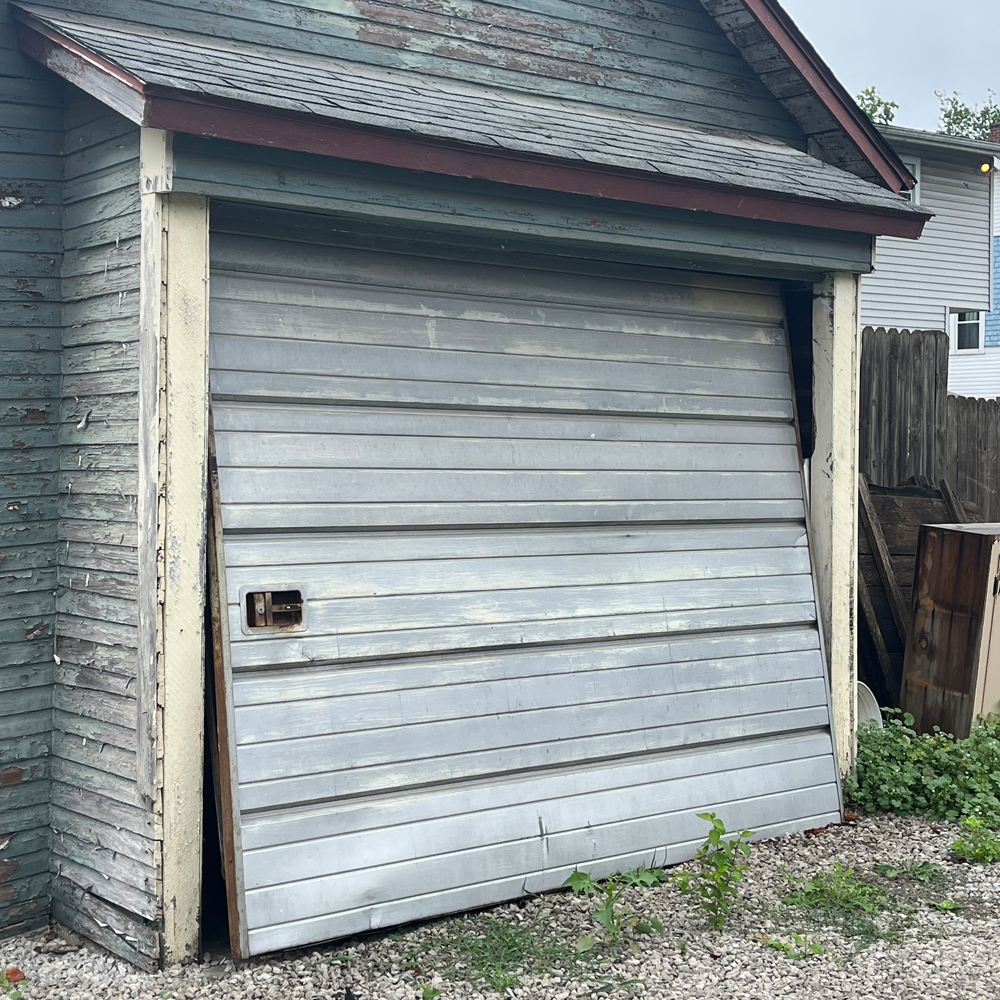
Your garage door suddenly stops midway, sounds like a gunshot cracked from the garage, or hangs unevenly; stop operating it immediately. Keep everyone out of the garage, don’t touch the cables or springs, and call for emergency garage door repair. Broken springs, snapped cables, and off-track doors involve components under extreme mechanical tension. Forcing the system can turn a single failed part into multiple damaged components.
Why Garage Door Emergencies Happen Without Warning
Most homeowners don’t think about their garage door until something goes wrong. That’s completely normal when a door works; it works quietly in the background. The problem is that garage doors are actually one of the heaviest moving parts of your entire home, often weighing between 150 and 400 pounds, depending on material and size.
That weight is counterbalanced by springs wound under enormous tension. When a spring snaps and eventually, they all do, it happens instantly. The sound is jarring. The door becomes either stuck in place or suddenly heavy enough that the opener can’t lift it safely.
The danger isn’t just mechanical inconvenience. It’s that most homeowners don’t know what’s broken, which means they don’t know what’s still at risk of breaking.
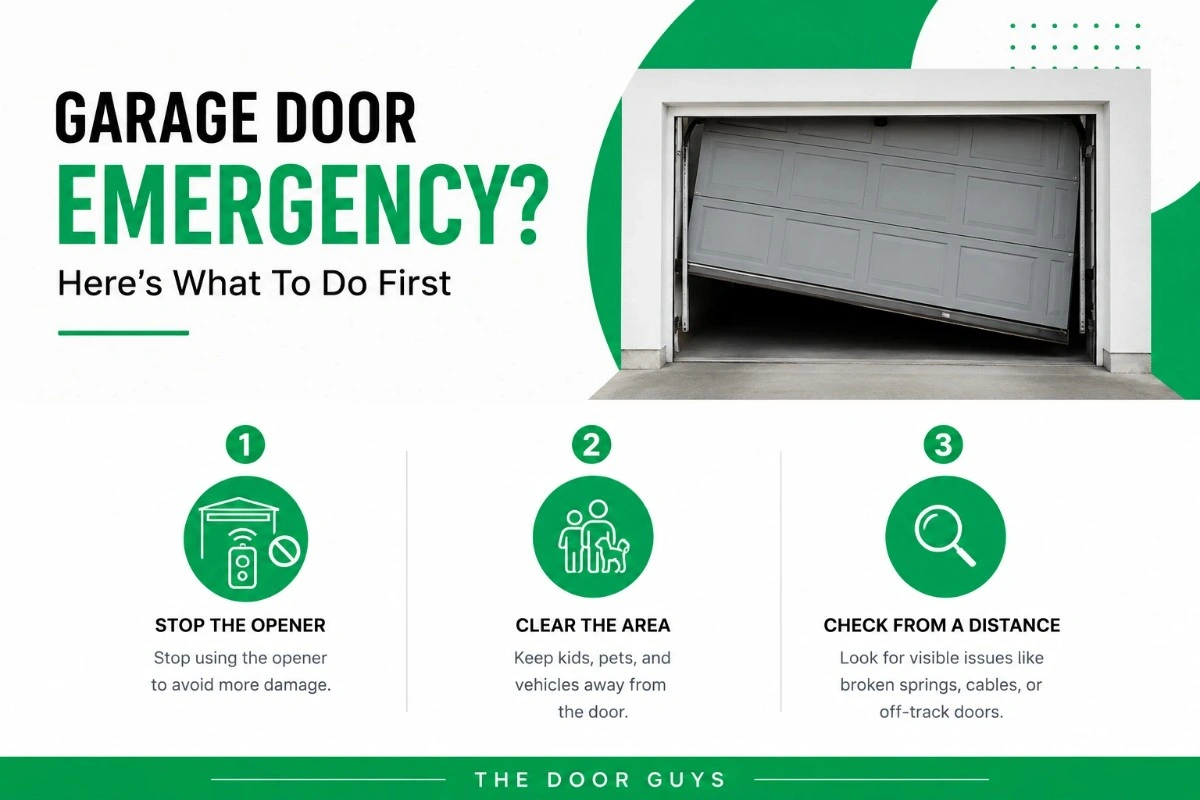
Step 1: Stop Using the Opener Right Now
This is the single most important thing you can do.
If your door stops moving, tilts to one side, shakes, makes grinding or popping noises, or simply won’t respond, stop pressing the remote. Every additional attempt to run the opener when something mechanical has failed puts more strain on the motor, the tracks, and whatever components are still intact.
We’ve responded to service calls where a homeowner burned out their opener motor trying to force a door that had a single broken spring. What should have been a straightforward spring replacement turned into a full opener replacement because the motor was run to failure.
One press too many is a genuinely expensive mistake.
Step 2: Clear the Area
A garage door under mechanical stress is unpredictable. Even a door that appears stuck in place can shift suddenly if a cable snaps or a roller pops out of the track.
Move children, pets, and anyone nearby out of the garage and away from the door. If there’s a vehicle parked partially under the door, don’t attempt to drive it out until you know the door is stable.
This isn’t overcaution. Off-track garage doors in particular can come down fast and without warning.
Step 3: Do a Visual Check From a Distance
You don’t need to diagnose the problem yourself. You just need to observe it safely.
Stand back from the door and look for:
- Cables hanging loose or piled on the floor. This almost always means a cable has snapped
- A gap in the spring torsion springs sits above the door; if you see a separation in the coil, the spring is broken
- One side of the door is noticeably lower than the other, a classic sign of cable or spring failure on that side
- The door sitting outside the track rollers can pop out, leaving the door panel unsupported
- Bent or bowed track sections are sometimes visible after an impact or severe mechanical failure
That’s it. Just look. Do not pull on cables, attempt to manually wind springs, or try to push the door back into the track by hand.
When Is It a True Emergency?
Not every garage door problem needs a midnight service call. But some situations genuinely can’t wait.
You’re looking at an urgent situation if:
- The door won’t fully close, leaving your home exposed overnight
- Your vehicle is trapped inside, and you need it
- The door came off its track and is hanging at an angle
- A cable snapped, and the door is suspended unevenly under tension
- The door is stuck partially open during extreme weather
These are the situations where 24-hour garage door repair makes sense. An unsecured garage is an open invitation both to weather and to anyone who might notice a door that won’t close on a residential property overnight.
For immediate help, our emergency service page covers same-day availability across Central Ohio.
The Mistakes That Turn Small Repairs Into Large Ones
After nearly three decades of emergency calls, the patterns are consistent. The homeowners who end up with the largest repair bills are rarely the ones with the worst initial failure. They’re the ones who responded to the failure the wrong way.
Continuing to run the opener is the most common. The opener is designed to sense resistance and stop, but when homeowners keep overriding that by pressing the button repeatedly, the motor takes damage trying to move something it can’t.
Pulling the emergency release cord under load is another frequent one. The red cord on your opener is designed to disengage the trolley so you can open the door manually. But if the door is being held in place by tension from a broken spring, releasing the carriage doesn’t free the door; it just removes the one thing keeping it from dropping suddenly.
Attempting a spring replacement without training is genuinely dangerous. Torsion springs store enough energy that an improper winding or release can cause serious injury. This is not a DIY repair, regardless of what online tutorials suggest.
What Emergency Repair Actually Looks Like
When a technician arrives for an emergency garage door repair call, the first thing they do is assess the system as a whole, not just the obviously failed part. That matters because garage door components work together. A broken spring puts additional strain on cables. A snapped cable can cause the door to shift and damage rollers or bend track sections. An opener that’s been forced too many times may have internal damage that isn’t obvious until tested.
A proper repair identifies what failed, fixes it, and checks the related components to make sure nothing else is on the edge of failure. That’s what separates an emergency repair from a temporary fix that brings you right back to the same situation in three months. For non-emergency repairs and routine maintenance, our garage door repair page covers what’s included in a standard service call.
A Scenario We See More Often Than We’d Like
It’s 11 PM. A homeowner hears a loud bang from the garage, like something fell off a shelf, or maybe a car backfired nearby. They check the garage, don’t see anything obvious, and go to bed.
The next morning, they press the opener. The motor strains. The door lifts about a foot, then stops. They press again. The opener grinds. Now the door is stuck at one foot, and the car is completely trapped inside. By the time we arrive, what was a broken torsion spring the night before has become a broken spring, a damaged opener trolley, and two bent rollers from the door being forced off its normal path. The spring repair was straightforward. The additional damage was preventable.
Frequently Asked Questions
My garage door made a loud bang, but it still looks okay. Should I still be concerned?
Yes. A loud bang from a garage is often the sound of a torsion spring breaking. The door Guys may still appear to sit normally, but if the spring has snapped, the opener is now working without proper counterbalance. Operating it in that condition risks motor damage and further mechanical failure. Have it inspected before using the door again.
Can I manually open my garage door if the opener stops working during an emergency?
Sometimes, but it depends on what failed. If a spring broke, the door may be too heavy to lift safely by hand, even with the emergency release engaged. If you’re unsure what caused the failure, it’s safer to leave the door in place and call for same-day garage door repair rather than risk dropping a door that isn’t properly supported.
What does it mean when my garage door is uneven or tilting to one side?
An uneven door almost always points to a problem on one specific side, usually a broken cable or spring on the lower side. The door hangs crooked because it’s lost support on that end. This is a situation where the remaining cable and spring are carrying more load than they were designed for, which increases the risk of a second failure.
How long does emergency garage door repair usually take?
Most emergency repairs, spring replacements, cable repairs, and off-track corrections are completed in a single visit. The timeline depends on what failed and whether any related components were damaged as a result.
Is it safe to park in my garage if the door won’t fully close?
If the door won’t close securely, the garage isn’t a secure space. Beyond the obvious security concern, a door that can’t close properly may also be at risk of shifting or falling, which makes it unsafe to work around. Urgent garage door service is worth scheduling before leaving vehicles or valuables inside.
What’s the difference between a broken spring and a broken cable?
Both affect the door’s ability to open and close safely, but they fail differently. A broken spring usually produces a loud pop and leaves a visible gap in the coil above the door. A broken cable typically causes one side of the door to hang lower, and you may see a loose cable piled on the floor. Either issue requires professional repair before the door can be operated.
Final Word
Garage door emergencies don’t give you much time to think. The best thing you can do is resist the urge to keep pressing buttons, keep people away from the door, and get a professional on-site quickly if your home security or safety is at stake. If you’re dealing with a situation that can’t wait, our team provides emergency garage door repair across Central Ohio, the same service we’ve been delivering since 1996.