
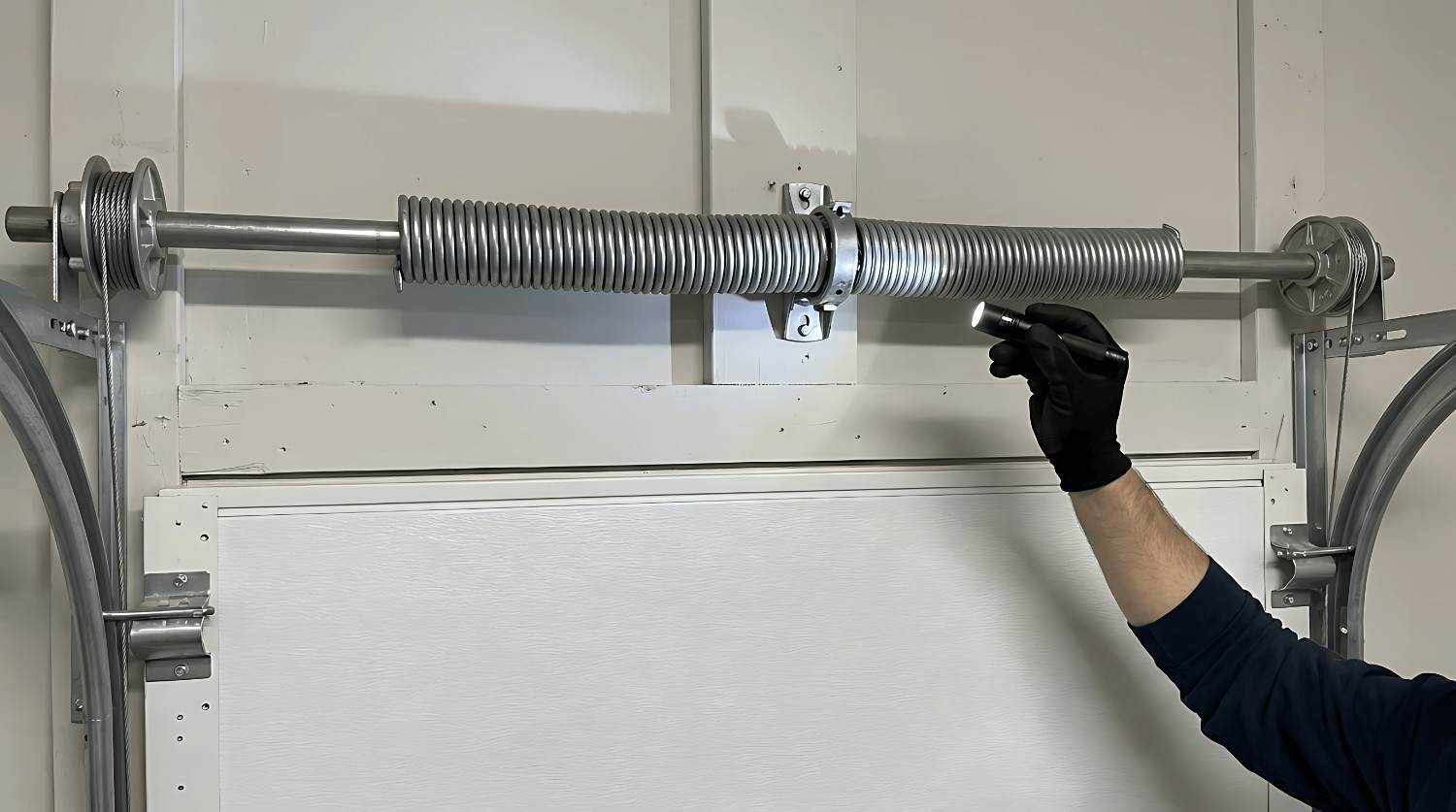
It is 6 a.m., the house is asleep, and your garage door starts shrieking like a rusty gate. Before you call anyone, know this: the noise is usually just dry metal, and you can fix it yourself in about 15 minutes.
This guide covers what to spray, where to spray it, and the mistakes that make the noise worse.
5 Signs Your Garage Door Needs Lubricant Right Now
Lubricant fixes noise and stiffness caused by friction, but it cannot fix worn or broken parts. Find the sign below that matches what you see and hear, and the last column tells you whether lube will help.
|
What you notice |
What is usually going on |
Will lube help? |
|
Squeaking or screeching |
Dry hinges, roller stems, or spring coils rubbing metal on metal |
Usually yes |
|
Grinding or rattling |
Old, gritty grease or dirt packed into the roller bearings. Worn rollers can also cause it |
Often. Clean first. If a wheel wobbles or is cracked, it needs replacing |
|
Jerky or slow movement |
Friction at the hinges and rollers, or debris and dents in the track |
Sometimes. Wipe the tracks and lube the hardware. If the door still jumps, call a pro |
|
A dull, dry look or rust spots |
The protective film has worn off bare metal on hinges and springs |
Yes. Wipe off loose rust first, then lube |
|
A louder, straining opener |
Extra drag makes the motor work harder. A tired spring can cause it too |
Sometimes. If it keeps struggling after lubing, the spring or opener needs a pro’s check |
If you notice one or two of these, lubricating is the quickest and safest first check. If you notice all five, keep reading, because the door may need more than a spray. Prefer to skip the ladder?
What Is the Best Lubricant for a Garage Door?
The best garage door lubricant is a silicone-based spray or a white lithium grease made for garage doors. Both cling to metal, attract less dust than ordinary oils, and stay workable across big temperature swings, which matters in a garage that gets hot in summer and freezing in winter. Regular lubrication also slows wear, one of the main garage door lifespan factors.
- Silicone spray: The best all-rounder for hinges, roller stems, and springs. It stays slick and picks up very little dust.
- White lithium grease: Thicker, so it suits heavy metal-on-metal contact and a screw-drive opener’s threaded rod.
- Penetrating oils: Handy for freeing a stuck bolt, but they evaporate quickly and are not designed for long-term protection.
What You Need Before You Start
Gather these first, so you are not hunting for a rag halfway up the ladder:
- Silicone spray with a straw nozzle, or white lithium grease
- Clean rags and a degreaser
- A sturdy step stool
- Gloves and safety glasses
- Cardboard to catch drips
Pick a dry day, close the door, and unplug the opener. Would you rather skip the supplies?
Step-by-Step Garage Door Lubrication
Follow these steps in order. Skipping the cleaning step is the most common reason a fresh lube job fails.
Step 1: Cut the Power and Close the Door
Unplug the opener and make sure the door is fully closed. Unplugging stops anyone from pressing the wall button or remote while your hands are near the hinges and rollers, and a closed door keeps the panels still so you can reach every hinge and roller from a step stool.
Step 2: Inspect and Clean the Hardware
Look over the hinges, rollers, springs, and brackets. Wipe off dust, old grease, and grime with a rag. If you find sticky, gritty buildup or light rust, a little degreaser or classic WD-40 on a rag helps loosen it. Then wipe the part dry.
Why this matters: lubricating over dirt creates a grinding paste that wears metal faster than no lube at all. While you are cleaning, wipe down the tracks too, but do not lubricate them.
Step 3: Lubricate the Hinges
Hinges are the metal joints that connect each door panel. Spray one short burst on each hinge pivot point, where the two plates meet and move. Work every hinge on every panel, top to bottom. Use the straw nozzle so the spray lands on the pivot, not on the door face.
Step 4: Lubricate the Rollers (Bearings and Stems Only)
Rollers are the wheels that ride inside the tracks. Spray only the bearings and the stem where the roller meets the hinge.
- Steel rollers with exposed bearings: Spray the bearing ring. These need lube the most.
- Nylon rollers: Apply a light touch on the stem only. The nylon wheel itself should stay dry.
- Sealed bearings: Skip the bearing and lube the stem only.
Keep lubricant off the track surface. A slick track makes rollers slip instead of roll.
Step 5: Lubricate the Springs
Spray a light mist along the spring coils, whether you have a torsion spring (the bar above the door) or extension springs (along each side). The mist reduces coil-on-coil friction, which causes much of the squeaking.
Garage door springs hold extreme tension. Misting the coils is fine, but never loosen, adjust, or wind the springs, winding cones, or the bottom brackets yourself.
Step 6: Lubricate the Opener the Right Way
What the opener needs depends on its drive type. Check your owner’s manual too, since some brands have their own rules. If the opener itself hums, stalls, or will not move the door, use our garage door opener troubleshooting guide.
- Chain drive: A light coat of grease on the chain.
- Screw drive: White lithium grease along the threaded rod.
- Belt drive: No lubricant on the belt. Lube can degrade it and cause slipping.
Step 7: Plug In, Cycle the Door, and Wipe Away Drips
Plug the opener back in and run the door up and down three or four times. This spreads the lubricant into the moving surfaces. Then wipe off any excess from the hinges, rollers, and springs, and check the cardboard for drips.
Step 8: Listen and Test
Watch and listen across a full cycle. If one spot is still noisy, wipe it and add a single extra spritz there. If the door moves smoothly and quietly, you are done.
Record the sound on your phone before you start. After you lube, record it again. The difference tells you whether dryness was the problem, and the clip helps a technician pinpoint the noise if you need to call.
Is WD-40 or Silicone Spray Better for Garage Door Rollers?
Silicone spray is better for garage door rollers and hinges. Many homeowners reach for the WD-40 already sitting in the garage, but classic WD-40 is a cleaner and water-displacer first, and a lubricant second. It thins out fast and leaves a light film that grabs dust, so the squeak often returns within weeks. If the noise keeps coming back, check other causes of noisy doors before you spray again.
|
What matters |
Classic WD-40 |
Garage door silicone spray |
|
Main job |
Loosens stuck parts, displaces moisture |
Long-lasting lubrication |
|
How long it lasts |
Short. It evaporates and thins out |
Longer. It leaves a slick, water-resistant film |
|
Dust pickup |
Higher, so grit builds up on rollers |
Lower, so hardware stays cleaner |
|
Best spot on your door |
Cleaning a stuck bolt or rusty hinge |
Hinges, roller stems, bearings, spring coils |
A simple rule to remember: clean with WD-40 if you like, but lubricate with silicone or white lithium grease. Always wipe the part dry before the final spray, and check the can’s label to confirm it is made for garage doors. Some brands sell a dedicated garage door formula alongside their classic can, so look for that wording.
What Parts of a Garage Door Need Lubrication?
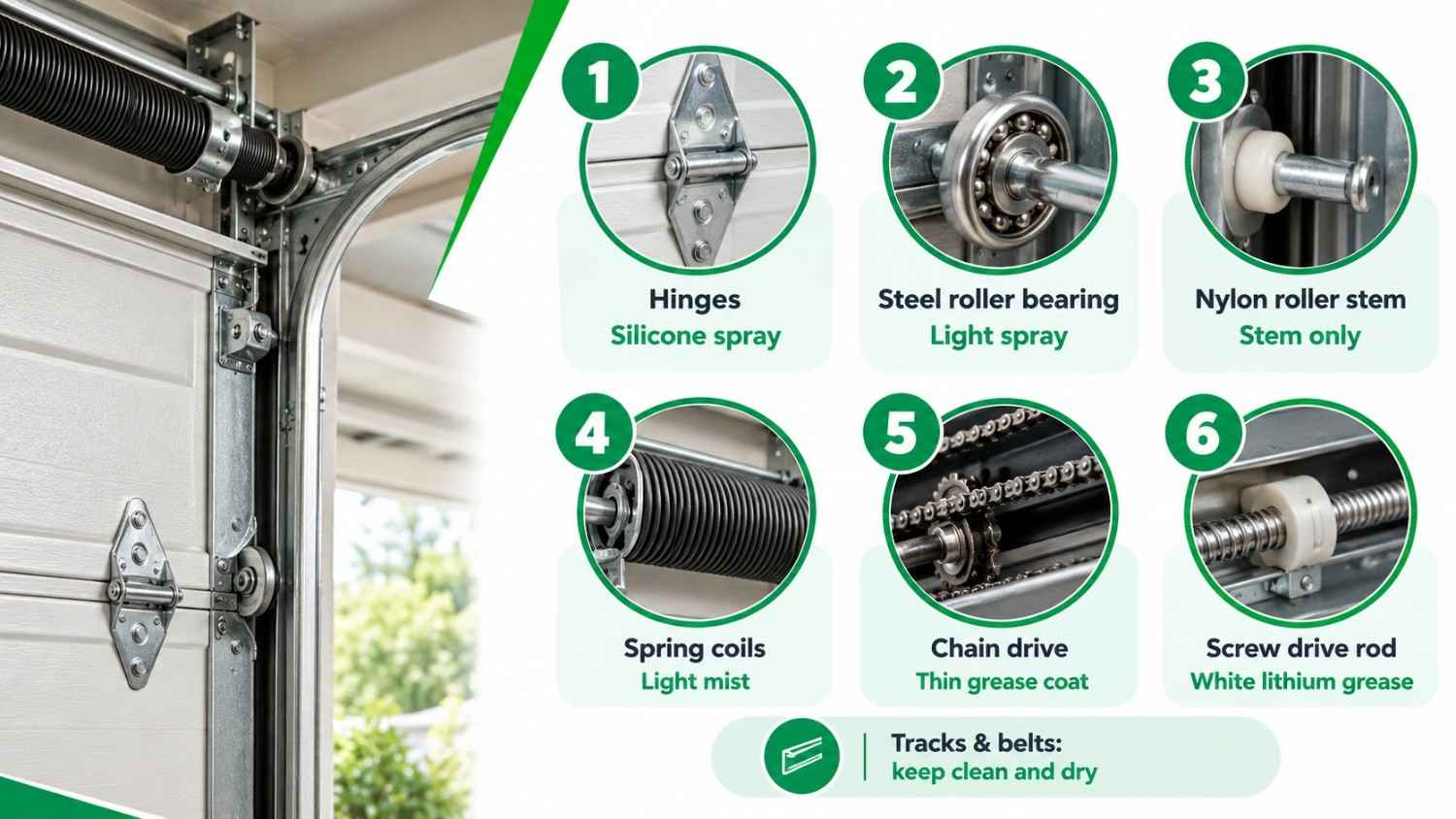
Use this table as a cheat sheet while you work. It shows what to spray on each part and how much, so you do not over-apply. Before you spray near the coils, learn the warning signs of failing springs.
|
Part |
Best lubricant |
How much |
|
Hinges |
Silicone spray |
One short burst per pivot |
|
Steel roller bearings |
Silicone spray |
Light spray on the bearing ring |
|
Nylon rollers |
Silicone spray, stem only |
A touch on the stem |
|
Spring coils |
Silicone spray |
Light mist, wipe excess |
|
Chain drive chain |
Light grease |
Thin coat |
|
Screw drive rod |
White lithium grease |
Thin coat along the rod |
|
Tracks and belts |
None |
Wipe tracks clean only |
Where NOT to Lubricate a Garage Door (Common Mistakes)
Lubricant in the wrong place can do more harm than skipping it, because it collects dust and can damage rubber and plastic. Here is what to leave alone and why. If a greased track has already made the door jam or jump, follow our garage door emergency first steps.
|
Don’t lubricate |
Why |
|
Door tracks |
Grease collects dust and debris, which makes rollers slip or jam. Wipe tracks clean with a rag instead. |
|
Belt-drive opener belts |
Lubricant can degrade the belt and cause slipping. |
|
Plastic or nylon gears and wheels |
Petroleum products can make them brittle. |
|
Photo eye sensors and remotes |
Residue can block the sensor’s view. |
|
Weatherstripping |
Use a thin silicone wipe only, never grease. |
Five mistakes that cause trouble:
- Spraying over dirt – Always clean first.
- Using only WD-40 – It cleans and loosens, but it thins out fast and attracts dust.
- Soaking the hardware – Two light passes beat one heavy spray. Excess drips and collects grit.
- Greasing the tracks – Tracks should be clean and dry.
- Touching spring hardware – Mist the coils and stop there.
Do Nylon or Steel Garage Door Rollers Need Grease?
Yes, but only the right part. Steel rollers need lubricant on their bearings. Nylon rollers are quieter and usually need just a light touch on the stem, since the nylon wheel itself should stay dry. If a wheel wobbles, cracks, or has flat spots, no lubricant will fix it. Here is when worn rollers need replacing.
How Often Should You Lubricate a Garage Door and Its Springs?
Twice a year works for most households, so set a reminder for spring and fall, a routine we recommend to every Ohio garage door repair customer. Use the door many times a day, or live near salty roads or dust? Go every three or four months.
Mist the spring coils lightly and wipe off the excess. Curious about how grease protects moving metal? It explains why a thin coat beats a heavy one. If you spot gaps, stretching, or rust, check how long springs really last. In cold weather, use a silicone spray that stays fluid in low temperatures, and clear off ice and moisture first.
A grinding door often needs only lube, not new springs, which is why our central Ohio door team checks the hardware first. Weighing a repair? See what spring replacement really costs.
When Lubrication Won’t Be Enough
Lube quiets a healthy door. It cannot fix a failing one. Call a pro from our team if you notice:
- A door that jerks, shakes, or sits crooked
- Loose or frayed cables
- A broken or gapped spring
- Noise that returns within days of lubricating
Our guide on what a full repair involves explains how to tell a simple fix from a serious problem, so you know when it is time to stop spraying and start calling.
Frequently Asked Questions
Q1. What is the best thing to lubricate a garage door with?
A silicone-based garage door spray or white lithium grease. Both resist dust and last longer than general-purpose sprays.
Q2. Can I use WD-40 on my garage door?
For cleaning and loosening stuck parts, yes. For regular lubrication, use silicone spray or white lithium grease.
Q3. Why is my garage door still loud after lubricating?
Worn rollers, loose hardware, or a tired spring are the usual causes, and they need a pro’s eye. Our garage door repair cost guide shows what to expect.
Q4. Is it safe to lubricate the springs myself?
Misting the coils is safe. Adjusting or winding them is not.
Q5. Can too much lubricant hurt my garage door?
Yes. Excess drips and attracts dirt. A light coat and a quick wipe is enough.
Q6. Should I lubricate my garage door in cold weather?
Yes, with a silicone spray that stays fluid in the cold. Dry off any moisture first.
Q7. Should I lubricate the garage door tracks?
No. Wipe the tracks clean with a dry rag. Lubricant on the track collects dust and makes the rollers slip.
Conclusion
Lubricating your garage door twice a year keeps it smooth, quiet, and reliable. Clean the hardware first, use silicone spray or white lithium grease, and lubricate only the hinges, steel roller bearings, and spring coils. Skip the tracks, belts, sensors, and nylon parts.
If the noise returns within days, or the door shakes, sags, or stops midway, the cause is worn parts, not dry ones. Book your garage door tune-up and let the Door Guys team inspect it safely. We have served central Ohio homeowners since 1996, and a quick call to (740) 383-1234 can save you a bigger repair later.