
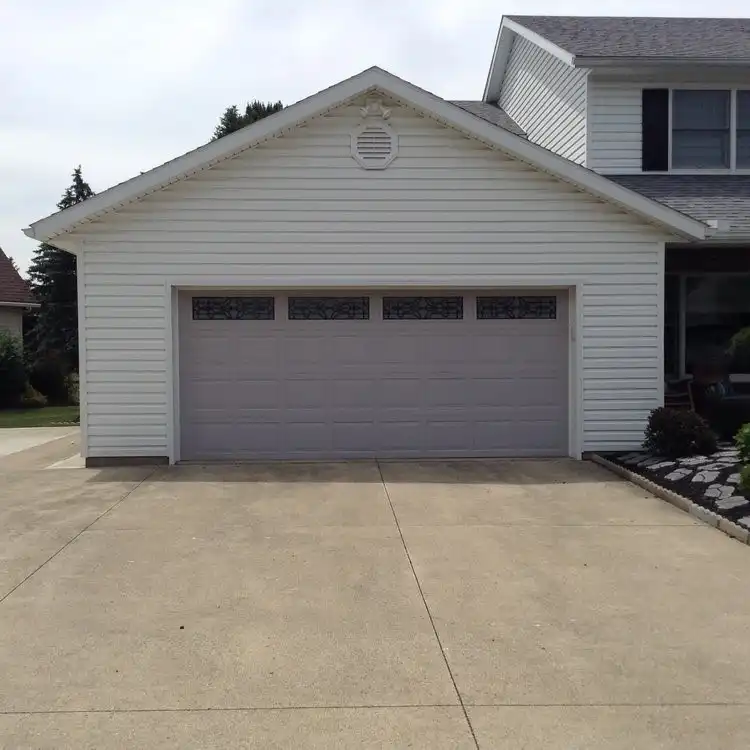
Most homeowners in Ohio don’t give their garage door a second thought until it gets stuck mid-winter, refuses to close in the wind, or starts letting cold air seep straight into the house. That’s usually when the calls come in.
After nearly three decades of completing overhead sectional door installations and servicing garage doors across Central Ohio, one thing is clear: the type of door you choose matters far more than most people realize. And in this climate, where temperatures swing wildly between seasons, the right choice almost always comes back to sectional garage doors.
A sectional garage door is made of horizontal panels connected by hinges that lift vertically along overhead tracks. Because they open straight up rather than swinging outward, they save driveway space, seal more tightly against cold air, and are safer and easier to maintain, which is exactly why they’ve become the most popular door style across Ohio.
What Is a Sectional Garage Door?
A sectional garage door is made of four to six horizontal panels joined together by hinges. When you open it, those panels follow a curved track rising vertically and then resting flat along the ceiling of your garage, a system commonly installed and maintained through professional garage door services.
Unlike the older one-piece tilt-up doors that swing outward before going up, sectional doors move entirely within the garage footprint. That means no clearance needed in front of the garage, no risk of hitting a car parked close to the door, and a tighter, more consistent seal along the bottom and sides.
For homeowners in Marion and surrounding areas, this design is particularly practical. Ohio winters are unpredictable, and a door that closes snugly every single time is worth more than most people account for when they’re shopping.
Types of Sectional Garage Doors
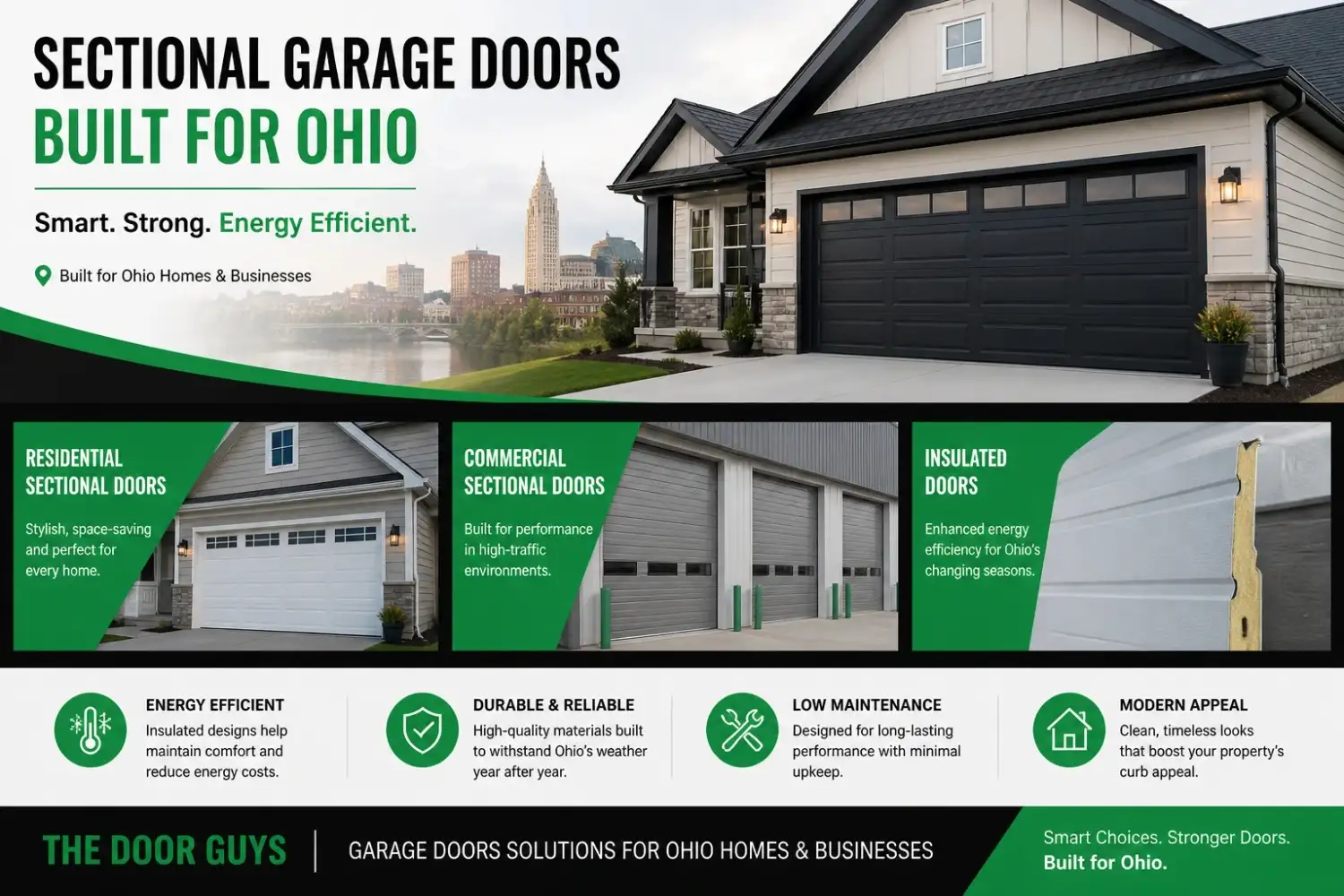
Not every sectional door is built the same way, and choosing the wrong type for your application is one of the most common mistakes. Here’s a breakdown of what’s available and where each type makes sense.
1. Residential Sectional Garage Doors
These are designed for daily home use, typically one to two open-and-close cycles per day. They focus on curb appeal, quiet operation, and energy efficiency. You’ll find them in steel, wood composite, and fiberglass finishes, and they’re often available in custom colors or wood-grain textures to complement your home’s exterior.
2. Commercial Sectional Garage Doors
Commercial applications, such as warehouses, auto shops, loading docks, and service facilities, demand a completely different build. Commercial sectional garage doors are engineered for high-cycle use, often running hundreds of open-and-close cycles per day. The hardware is heavier, the springs are rated for higher cycle counts, and the panels are reinforced to handle constant movement without warping or wearing out prematurely.
3. Steel Sectional Garage Doors
Steel is the most widely installed material in Ohio, and for good reason. It holds up against impact, resists moisture, and requires very little upkeep compared to wood. Galvanized steel won’t rust even in humid summers or salty winter conditions. Whether you’re replacing a residential door or outfitting a small commercial property, steel sectional garage doors are a reliable long-term choice.
4. Insulated Sectional Garage Doors
If your garage shares a wall with a living space or if you use it as a workspace during the year, insulation is not optional; it’s essential. Insulated sectional garage doors typically use polyurethane or polystyrene foam between two steel skins. This construction does three things well: it keeps the garage warmer in winter, quieter year-round, and structurally stronger than a single-skin panel.
For Ohio homes, this is often the upgrade homeowners wish they had done sooner.
Sectional vs. Single Panel Garage Doors: Which Is Better?
If you’re replacing an older door, there’s a good chance what’s currently installed is a single-panel (or ’tilt-up’) door. Here’s how the two actually compare when you’re living with them day to day:
| Feature | Sectional Garage Door | Single Panel Door |
| Opening Mechanism | Rises vertically along the track | Tilts outward before rising |
| Driveway Clearance Needed | None | Yes, can’t park close |
| Insulation Options | Excellent (multi-layer panels) | Minimal |
| Safety | Higher spring tension is contained | Lower torsion exposed |
| Repair Flexibility | Individual panels replaceable | The full door often needs replacing |
| Weather Sealing | Tighter, consistent seal | Less consistent over time |
| Longevity | 15–30 years with maintenance | Shorter with the same use |
For almost every modern Ohio home or commercial property, sectional overhead garage doors outperform single-panel systems. The driveway space savings alone make a meaningful difference for households where cars park close to the door—something we regularly point out at The Door Guys when helping customers choose the right system.
Why Ohio Homeowners Keep Choosing Sectional Doors
From working with homeowners across Marion since 1996, the reasons people upgrade to sectional doors tend to come down to the same handful of things:
- Ohio winters are harsh, and insulation matters. An insulated sectional door can make a measurable difference in how warm an attached garage stays, and that flows directly into the rooms adjacent to it.
- The tight seal reduces drafts. Sectional doors close flush against weather stripping at the bottom and sides, limiting the air infiltration that makes garages cold and damp.
- They’re quieter. Modern sectional doors with torsion spring systems operate far more quietly than the old extension systems that were common on tilt-up doors.
- Individual panel replacement is possible. If a car backs into the door or a storm causes localized damage, often only that section needs replacing, not the entire door system.
- Security has improved significantly. Modern locking mechanisms and automatic openers with rolling code technology make today’s sectional doors substantially harder to compromise than older systems.
- Curb appeal carries real value. A new garage door consistently ranks among the highest-return exterior upgrades in home renovation studies. It’s one of the first things people see.
Real experience from the field: One of the most common things homeowners say after upgrading to an insulated sectional door is that they didn’t realize how much cold air their old door was letting in until it stopped happening.
What to Expect During Sectional Garage Door Installation
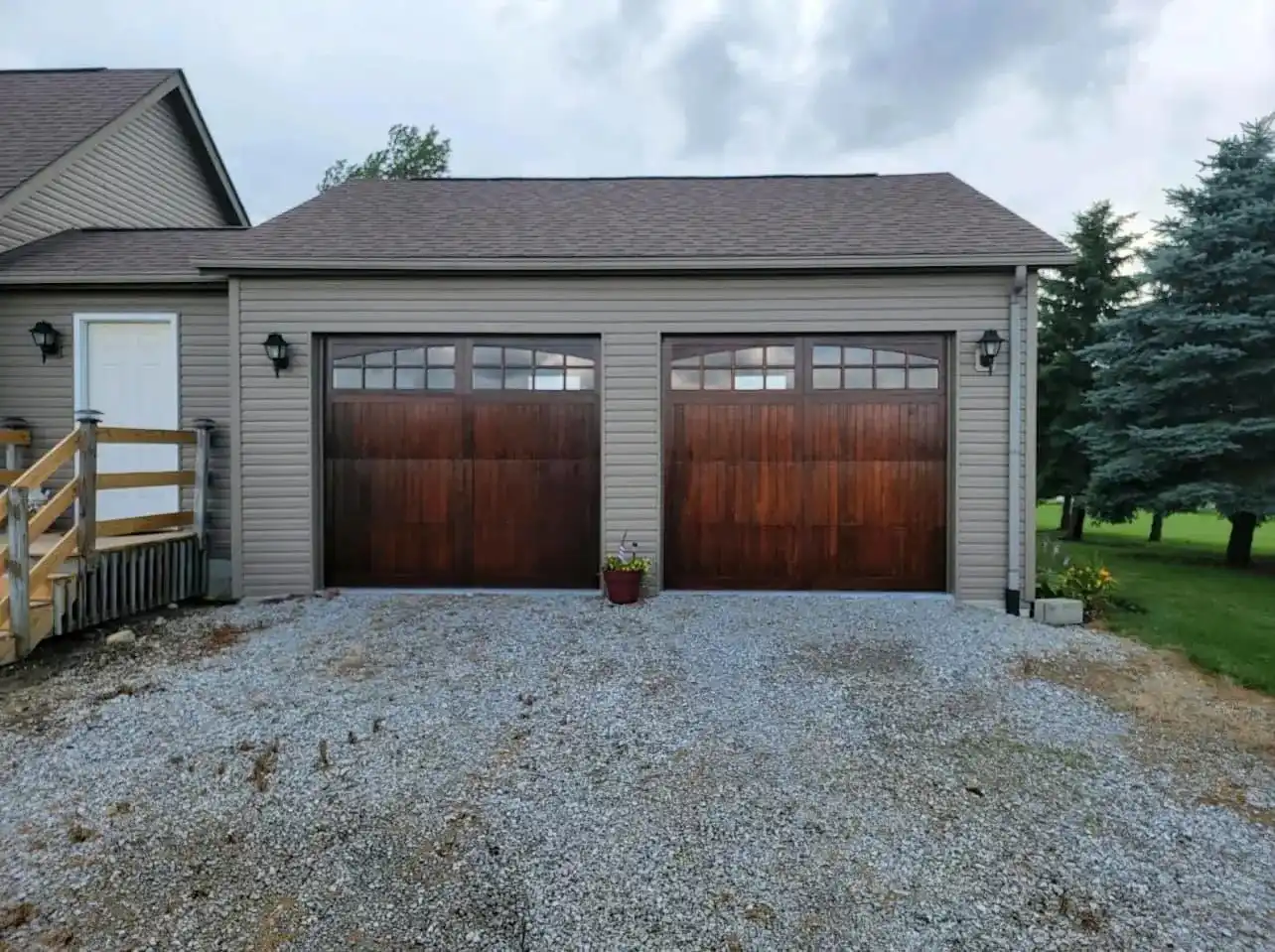
Installation is where a lot of DIY attempts go wrong, and the consequences can be serious. Garage door springs are under extreme tension. An improperly wound torsion can release that energy suddenly, causing significant injury.
A proper sectional garage door installation in Ohio involves more than dropping panels into a track. Here’s what a professional installation actually covers:
- Frame and header assessment, verifying the opening is square, and the structure can support the door’s weight
- Track system installation, mounting, and aligning horizontal and vertical tracks precisely
- Panel-by-panel installation starting from the bottom section up, with hinges and rollers set at each joint
- Spring system calibration, setting the torsion tension to balance the door correctly
- Opener integration, connecting, and programming the drive system
- Safety testing: checking auto-reverse function, balance, and manual release
If you’re in Marion or Central Ohio and you’re considering professional installation, our garage door services team handles every step of this process and won’t leave until everything tests correctly.
Common Sectional Garage Door Problems
Even a well-installed sectional door will eventually need attention. Knowing what to watch for can prevent a minor issue from becoming a major repair.
Track Misalignment
When the door starts moving unevenly or making a grinding sound, the vertical or horizontal tracks are often the first place to check. Tracks can shift after years of use or a minor impact. Left unaddressed, a misaligned track causes accelerated wear on rollers and cables.
Damaged Panels
Dents and cracks from minor impacts are common. Depending on the severity and location, individual panel replacement is often possible, one of the key advantages of sectional construction versus a one-piece door.
Opener Failures
When the opener runs, but the door doesn’t move or moves partway and reverses, the issue may be the motor, the logic board, the safety sensors, or the drive mechanism. Many opener problems are diagnosable without replacing the entire unit.
If your door is already showing any of these symptoms, our garage door repair team can assess and resolve most issues the same day.
Can You Replace Just One Section of a Sectional Garage Door?
Yes, and this is one of the most practical advantages of sectional construction. If damage is limited to one or two panels, those sections can often be replaced independently without touching the rest of the door system.
The key requirement is that the replacement panels match the existing door in profile, thickness, and finish. If the original door manufacturer still produces that model, sourcing panels is straightforward. For older doors, this may require more legwork, but it’s still far more economical than a full replacement in many cases.
If you’re unsure whether your damage is panel-level or system-level, a professional assessment is the fastest way to get a clear answer. In some situations, it makes more sense financially to consider a full garage door replacement rather than patching an aging system.
Why Ohio’s Climate Makes Door Selection More Important Than Most People Think
Ohio doesn’t have a gentle climate. Marion and Central Ohio residents deal with below-freezing temperatures in winter, high humidity in summer, and storms that bring wind, ice, and occasionally hail. A door that works fine in a mild climate can underperform dramatically here.
Specifically, the factors that matter most in this region:
- Cold winters: Overhead sectional garage doors with polyurethane insulation maintain their shape and seal even at low temperatures, while uninsulated doors can warp or become brittle over time.
- Freeze-thaw cycles: The bottom weather seal is vulnerable here. A quality seal that compresses evenly across the full width of the door is critical.
- Wind load: Sectional doors with horizontal bracing and reinforced end stiles handle lateral wind pressure better than lighter alternatives.
- Humidity: Steel sectional doors resist moisture better than wood without the maintenance demands that wood requires.
For homeowners evaluating commercial options in addition to residential needs, our commercial garage doors page covers the higher-cycle and heavy-duty options built for business use.
About The Door Guys
The Door Guys has been serving Central Ohio since 1996, working with homeowners, property managers, and commercial clients across Marion and the surrounding region. In nearly 30 years of hands-on work, the team has installed and serviced thousands of garage doors.
What that experience translates to, practically: faster diagnosis, fewer callbacks, and honest assessments about when a repair makes sense versus when a replacement will serve a homeowner better long-term.
Frequently Asked Questions
Q.1 Are sectional garage doors good for Ohio’s cold winters?
Yes, particularly insulated models. A well-sealed sectional door with polyurethane foam panels holds up better in freeze-thaw conditions than any single-panel or roll-up alternative at the same price point. The tight perimeter seal is especially valuable in attached garages where heat loss matters.
Q.2 What are the disadvantages of sectional garage doors?
The main trade-offs are upfront cost and installation complexity. Sectional doors require more components ( tracks, rollers, opener) than simpler door types, which means more parts that can eventually wear. However, the individual-panel repair option, better insulation, and longer lifespan typically offset this over time.
Q.3 How long do sectional garage doors typically last?
Most steel sectional doors last between 15 and 30 years with reasonable maintenance, meaning annual lubrication of moving parts, periodic inspection of cables, and weather seal replacement as needed. The opener typically requires attention before the door itself does.
Q.4 Which is better, a roller door or a sectional garage door?
For most Ohio homes, sectional doors are the stronger choice. They offer significantly better insulation options, more design flexibility, and easier maintenance access. Roller doors are more compact when open and can work well in tight-clearance commercial applications, but they offer less insulation and fewer style options for residential use.
Q.5 Where does a garage lose the most heat?
The door itself is typically the largest source of heat loss, especially in older, uninsulated doors with poor bottom seals. Gaps along the sides and top of the frame are the next most significant contributors. An insulated sectional door with properly fitted weather stripping addresses all three points simultaneously.
Q.6 Is sectional garage door installation something a homeowner can do themselves?
Some components, like panel replacement or basic opener programming, are manageable for experienced DIYers. Full installation, however, involves calibrating torsion springs under high tension, which carries serious injury risk if done without the right tools and experience. Professional installation also ensures the door is properly balanced, which directly affects motor lifespan and daily reliability.
Final Thoughts
If your current garage door is aging, drafty, or starting to give you trouble, the decision to upgrade is rarely one homeowners regret. Sectional garage doors offer the best combination of insulation, durability, security, and repairability available, and in Ohio’s climate, those qualities matter more than they might in a milder region.
The difference between a door that lasts 10 years and one that lasts 25 often comes down to product quality and installation quality in equal measure.