
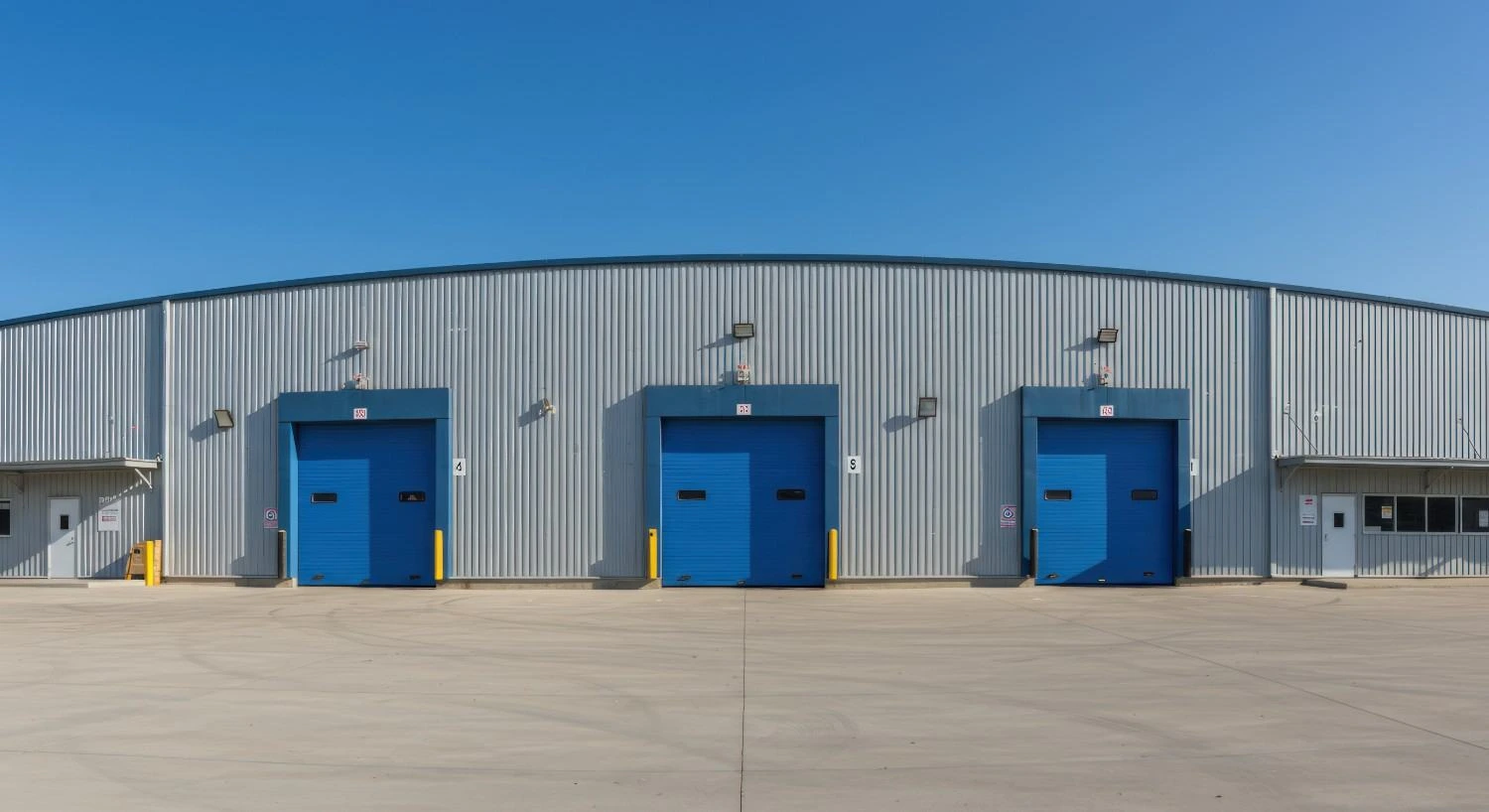
A loading dock door that sticks, grinds, or won’t open can stop trucks, delay shipments, and put your crew at risk in minutes. Loading dock door repair is not a “deal with it later” job, because a high-cycle commercial sectional door can open and close hundreds of times a day. This guide covers the most common problems, what each warning sign means, and when a professional repair is the smartest move.
If you already have a door down, our technicians fix these issues daily. We have worked on doors since 1996, and the same handful of failures show up again and again.
Common Loading Dock Door Problems: What Usually Goes Wrong?
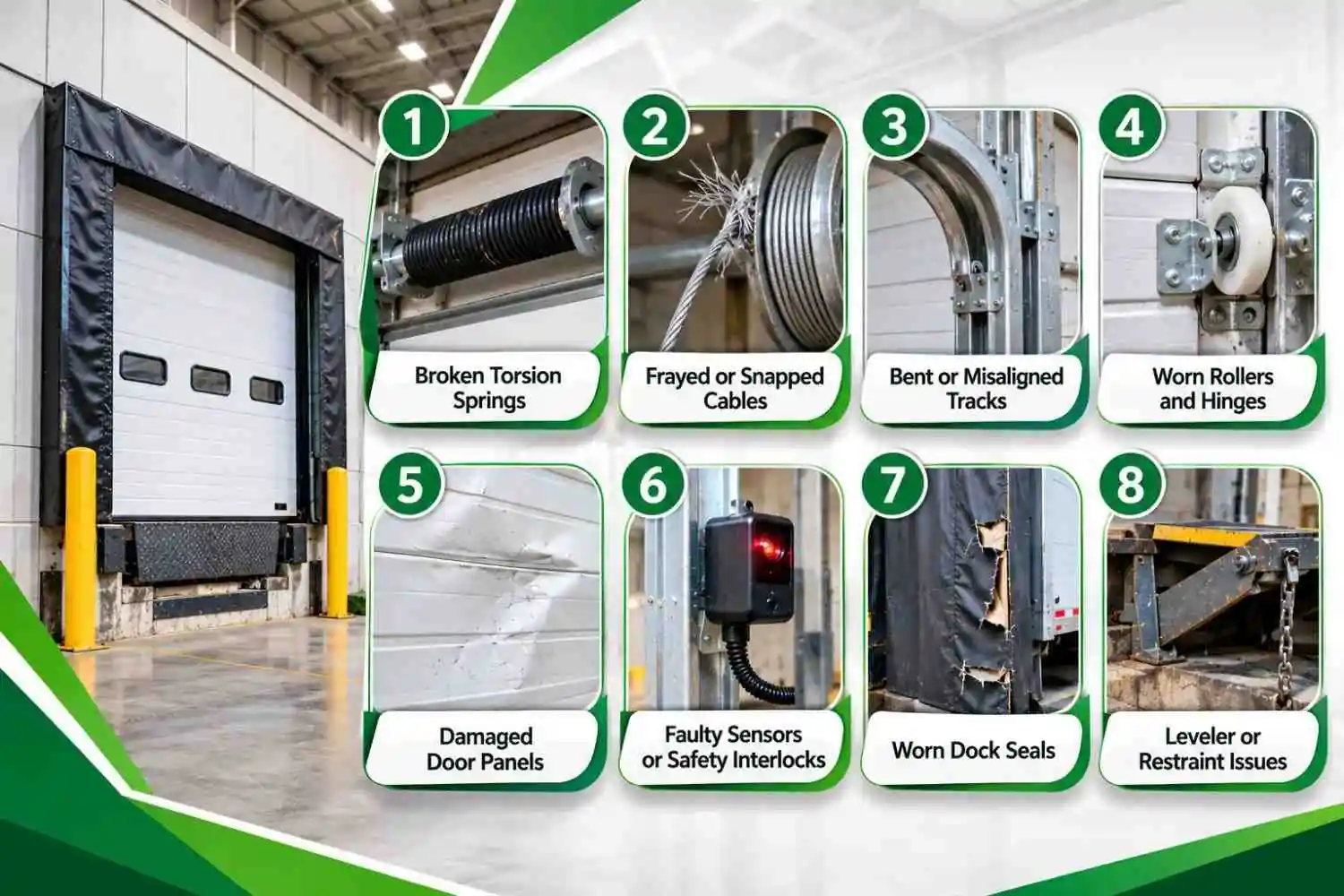
Most common loading dock door problems come from constant use, forklift traffic, and trailer pressure. These are the eight we see most:
Broken or weak torsion springs
Springs are rated for a set number of cycles, and a busy dock uses them up fast. The door feels heavy or stops lifting. Ignoring it strains the opener and cables.
Frayed or snapped cables
Rust, rubbing on the drum, or uneven spring tension wears cables down. One side of the door can lag or drop. A snapped cable is a serious safety risk.
Bent or misaligned tracks
Forklift hits, loose brackets, and rust push tracks out of line. The door binds, shakes, or scrapes. Left alone, it chews up rollers and can jump the track.
Worn rollers and hinges
Thousands of cycles flatten rollers and loosen hinges, especially when they run dry. You hear grinding and see slow, jerky travel. Worn parts also pull the door out of line.
Damaged door panels
Forklifts and pallets dent, crack, or puncture panels. Weak spots let in weather and strain the track. Small dents often grow into bigger damage.
Faulty sensors or safety interlocks
Dirty or misaligned photo-eyes, damaged wiring, or drifted travel limits are the usual causes. The door stops, reverses, or refuses to close. Never bypass a safety sensor to keep it running.
Worn dock seals
Trailers hit the pads again and again until they tear or flatten. Drafts, daylight, and water show up around the trailer. Moisture then speeds up rust on tracks and springs.
Leveler or restraint issues
Out-of-adjustment springs, hydraulic wear, or impact damage are the usual causes. A restraint that fails to hold the trailer lets it shift during loading. That shock passes to the door and its tracks.
Dock Door Repair Solutions for Each Problem
Most fixes are straightforward for a trained technician, but springs, cables, and tracks are not DIY jobs. Here is what each repair involves and who should do it.
|
Problem |
The fix |
Who should do it |
|
Torsion springs |
Replace the springs and rebalance the door |
Technician only |
|
Cables |
Replace the cables, then check the drums and spring balance |
Technician only |
|
Tracks |
Straighten minor bends, tighten brackets, replace badly bent sections |
Technician |
|
Rollers and hinges |
Replace worn parts and use the right lubricant |
Technician |
|
Door panels |
Replace damaged panels (sectional) or bent slats (rolling steel) |
Technician |
|
Sensors and interlocks |
Clear blockages and wipe lenses first, then realign sensors, repair wiring, reset limits |
Staff for the simple checks, technician for the rest |
|
Dock seals |
Replace torn or compressed pads |
Technician |
|
Levelers and restraints |
Adjust or repair, then check the door for stress damage |
Technician |
What Do Different Noises and Symptoms Mean?
Your door usually tells you what is wrong before it fails. Here is a quick guide:
|
What you notice |
What it usually means |
|
Grinding or scraping |
Worn rollers, dry hinges, or a bent track |
|
Loud bang, then the door will not lift |
Broken torsion spring |
|
Slow, jerky, or uneven movement |
Out-of-balance door, frayed cable, or motor strain |
|
Door tilts or hangs crooked |
Cable issue on one side |
|
Gaps or light showing when closed |
Worn seals or damaged panels |
|
Door reverses or stops on its own |
Sensor, safety interlock, or wiring problem |
|
Dock door won’t open at all |
Spring or cable failure, power issue, or operator fault |
If your dock door won’t open, do not keep pushing the button. Forcing a door with a broken spring or cable can damage the motor and make the repair bigger.
How Does One Failing Part Damage the Rest of the Door?
This is the part many repair guides skip. Dock door parts work as a system, so one weak part pushes extra load onto the others.
- A weak spring makes the opener work harder, which strains the motor and wears the cables.
- A frayed cable lets one side of the door lag, which twists the panels and bends the track.
- A bent track chews up rollers and hinges.
- A worn seal lets weather in, and rust and ice then attack springs and tracks.
- A leveler or restraint that is out of adjustment can knock the door during loading.
A common call we get goes like this: a warehouse notices a slightly noisy door and waits a few weeks. By the time they call, the spring is worn out, the cable is frayed, and the track is bent. A simple spring service has turned into a multi-part repair. Catching the first sign early almost always costs less and means less downtime.
What Are the Pads Around a Dock Door Called?
The pads around a dock door are called dock seals. A related option is a dock shelter, which uses a soft fabric frame instead of foam pads. Both create a snug fit between the trailer and the building.
They wear out fast because trailers back into them hundreds of times a week. Over time, the foam compresses, tears, or cracks. Damaged seals lead to:
- Lost heating and cooling
- Rain, snow, dust, and pests getting inside
- Moisture that speeds up rust on tracks and springs
- Extra stress on the door from uneven closing
When you see daylight around the trailer or torn foam, it is time to replace the seals.
Is It Cheaper to Fix a Dock Door or Replace It?
Repair usually wins when:
- The door is about 10 to 12 years old
- Only one or two parts have failed (a spring, a cable, a few rollers)
- The panels and track are still straight and solid
Replacement usually makes more sense when:
- Several parts are failing at the same time
- The door has very high daily use and is near the end of its cycle rating
- You have paid for repeated repairs in a short period
- The panels are badly dented, rusted, or out of shape
Here is a simple rule of thumb: if repair bills over the past year are getting close to half the cost of a new door, replacement is usually the better move. Also think about downtime. Every hour a dock door is down can mean late trucks and idle crews, and that cost often matters more than the part itself.
If replacement makes sense, you can compare heavy-duty door replacement options before you decide.
What Are the Different Types of Dock Doors and How Does That Affect Repair?
The two most common types are sectional and rolling steel dock doors.
- Sectional dock doors are made of hinged panels that roll up on tracks. They are quiet, insulated, and common for shipping and receiving. Wear shows up in the rollers, hinges, panels, and springs. Forklift hits often dent or crack individual panels, which can often be replaced one at a time.
- Rolling steel dock doors roll up into a coil above the opening. They are very tough and good for security and high traffic. Wear shows up in the curtain slats, guides, and the counterbalance spring inside the barrel. Damage from impacts can bend the slats and make the door bind.
Standard dock door size is often around 8 to 10 feet wide and 8 to 10 feet tall, but sizes vary by building and trailer type. For a deeper look at the gap between home and business doors, read our guide on what sets commercial doors apart.
How Can You Spot Problems Early Without Special Tools?
A supervisor can run this quick check at the start of each shift. No tools needed:
- Listen – Any new grinding, popping, or scraping sounds?
- Watch the movement – Does the door travel evenly, or does one side lag?
- Look at the cables – Any fraying or loose strands you can see from the floor?
- Check the seals – Any tears, gaps, or flattened foam?
- Check the panels – Any new dents, cracks, or gaps between sections?
- Look under the leveler – Any hydraulic fluid on the floor?
- Test the safety features – Does the door stop or reverse when it should?
Keep your hands off springs, cables, and the parts under tension. If something looks wrong, tag the door out of service and call a technician.
How Do Ohio Seasons Wear Down Dock Doors?
Freezing temperatures, ice, and road salt are hard on dock doors. Cold stiffens and cracks seals, salt speeds up rust on tracks, hinges, and fasteners, and thick grease slows rollers. Summer heat and humidity add their own wear. A fall and spring check catches these issues before they cause a breakdown.
When Should You Call for Professional Loading Dock Door Service?
Call a professional right away if you notice:
- A loud bang or a door that suddenly feels very heavy
- Frayed, loose, or snapped cables
- A door that is crooked, off the track, or will not move
- A bent track or a door that binds partway
- Safety sensors or interlocks that are not working
Never try to fix springs, cables, or major track problems yourself. These parts hold a lot of stored energy and can cause serious injury. A trained technician has the right tools and training to do it safely.
A professional visit also does more than fix the broken part. A technician checks the whole system, including the door, leveler, restraint, and safety devices, so one problem does not turn into three. For homeowners and smaller facilities dealing with similar warning signs, see our post on fixes for everyday garage door trouble.
How Does Regular Maintenance Cut Repair Costs?
Scheduled maintenance is the easiest way to protect a busy dock. A good plan includes:
- Lubrication of rollers, hinges, and moving parts with the right products
- Visual inspections of springs, cables, tracks, and seals
- Hardware tightening (high-cycle doors shake bolts loose)
- Safety device testing on sensors and interlocks
- Written service notes so you can see patterns and plan replacements
Busy facilities often do best with service visits on a set schedule, based on how many cycles the doors run each day. Small fixes made early cost much less than emergency repairs in the middle of a shipping rush. For the wider hazards around your dock, such as forklift traffic and dock edges, see OSHA’s loading dock safety guidance.
Frequently Asked Questions
Q1. What are the parts of a loading dock called?
The main parts are the dock door, dock leveler, dock seals or shelters, bumpers, vehicle restraints, and the dock platform.
Q2. What is the difference between a dock and a pier?
A dock is where vehicles or boats load and unload. A pier is a structure that extends out over water.
Q3. How often should a loading dock door be inspected?
Every 3 to 6 months for most commercial dock doors, and more often for the busiest docks.
Q4. What are the signs a dock leveler needs repair?
A lip that won’t extend or rest on the trailer bed, jerky ramp movement, or cracks in the pit.
Q5. How long does dock door repair take?
Springs, rollers, and sensors are often fixed in one visit. Track, panel, or replacement jobs take longer if parts must be ordered.
Q6. What should I look for in a dock door repair company?
A team that services commercial sectional and rolling steel doors, stocks common parts, and quotes clearly before starting. The Door Guys offers free estimates and 24/7 service.
Next Steps: Get Your Dock Door Checked
If your loading dock door is grinding, shaking, hanging crooked, or won’t open, get it checked quickly. Fast action protects your crew, your trucks, and your schedule.
Ready for help? You can send us a quick message for same-day or emergency service, or call (740) 383-1234.
Keep Your Dock Running Smoothly
A working dock door keeps trucks moving and people safe. For reliable commercial door support across Central Ohio, start with a professional assessment. See everything our team offers to learn about our full range of commercial and residential door services.