
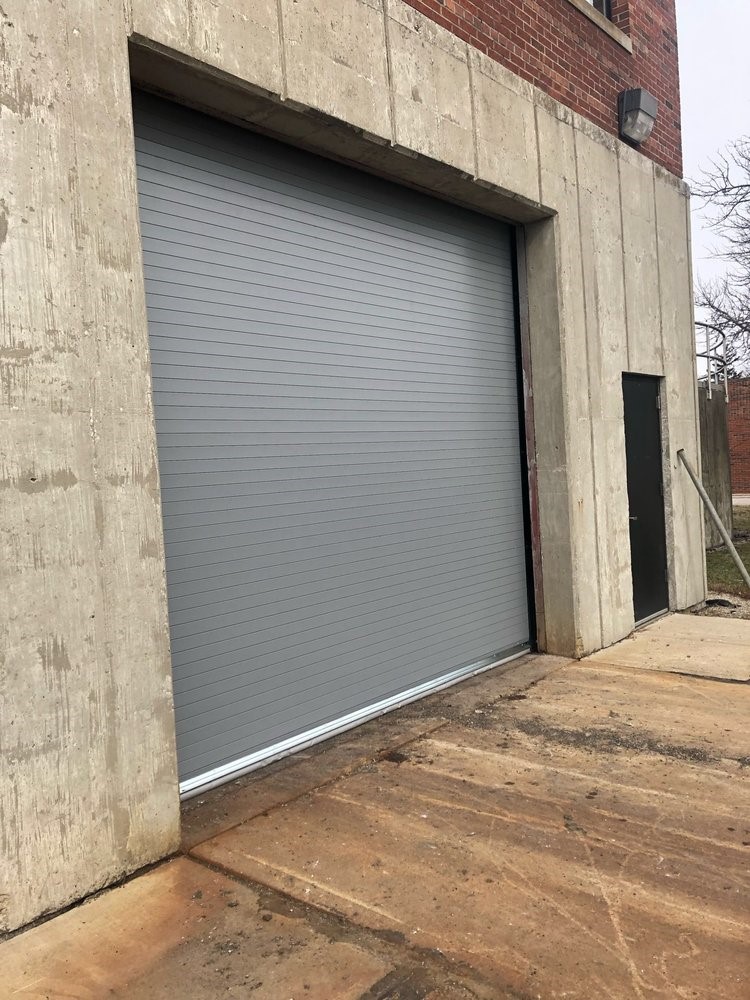
A warehouse door doesn’t get a day off. It opens for the first delivery truck at sunrise and keeps cycling until the last forklift parks for the night. When it jams, drags, or fails to seal properly, the ripple effect hits shipping schedules, energy bills, and sometimes employee safety. Picking the right rolling steel door isn’t about grabbing the biggest curtain on the price sheet; it’s about matching the door to how your building actually operates.
This guide breaks down what commercial property owners and facility managers should know before specifying a rolling steel door, from terminology and door categories to code requirements, sizing, and long-term upkeep.
Rolling steel doors, sometimes called roll-up doors, coiling doors, or service doors, are built for commercial buildings that need daily security, dependable cycling, and minimal downtime. The right model depends on your traffic volume, security needs, insulation goals, and local wind and fire code requirements, not just the size of the opening.
What Are Warehouse Rolling Doors Called?
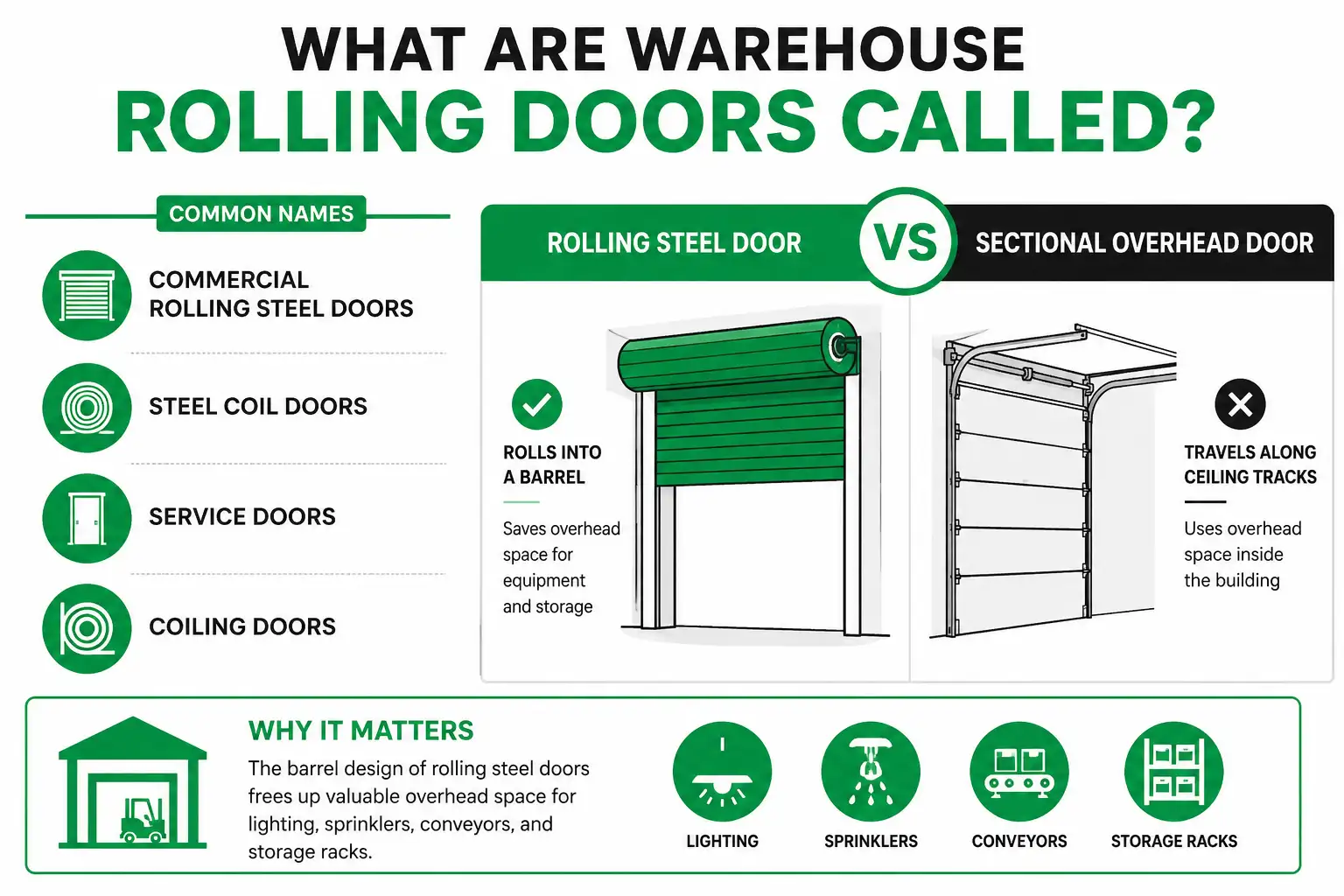
Ask five different contractors what to call a warehouse roll-up door, and you may get five different answers. Terms like commercial rolling steel doors, steel coil doors, service doors, and coiling doors get used almost interchangeably, but the products behind them aren’t always identical.
A basic service door for a small loading bay is built differently from a heavy-duty roll-up door running hundreds of cycles a day in a distribution center. And a rolling steel door isn’t the same as a sectional overhead door. Sectional doors travel along ceiling tracks in hinged panels, while a rolling steel curtain coils into a compact barrel above the header. That barrel design frees up overhead space for lighting, sprinklers, conveyor systems, and storage racks, which matters a lot once you’re trying to maximize square footage inside a working warehouse.
Key Benefits of Commercial Rolling Steel Doors for Warehouses
Commercial buildings put far more strain on a door than a typical residential garage ever will. Facilities running multiple shifts, forklift traffic, and constant truck deliveries need equipment that’s built for the workload.
Built for repeated cycling
Some loading dock doors open hundreds of times a day. High-cycle rolling doors are engineered with that kind of use in mind, which cuts down on premature wear and unplanned service calls.
Space efficiency
Since the curtain rolls up instead of sliding across the ceiling, you keep more clearance for racking, HVAC ductwork, and overhead equipment.
Stronger security
Heavy-gauge steel curtains, reinforced guide rails, and commercial-grade locking hardware make it harder for anyone to force an opening after hours, a real concern for facilities storing high-value inventory.
Better performance under stress
Wind-load-rated rolling doors and reinforced systems hold up better against pressure, impact, and temperature swings than standard-duty models.
Lower lifetime downtime
A door specified correctly for its cycle count generally needs fewer major repairs than one pushed beyond its rated capacity. Routine maintenance stretches that reliability even further.
If your facility also needs fast interior traffic flow between climate-controlled zones, it’s worth pairing a rolling steel door with a fabric roll-up door for the interior openings. The Door Guys often space the two together so exterior security and interior speed don’t compete with each other.
Which Type of Rolling Steel Door Fits Your Building?
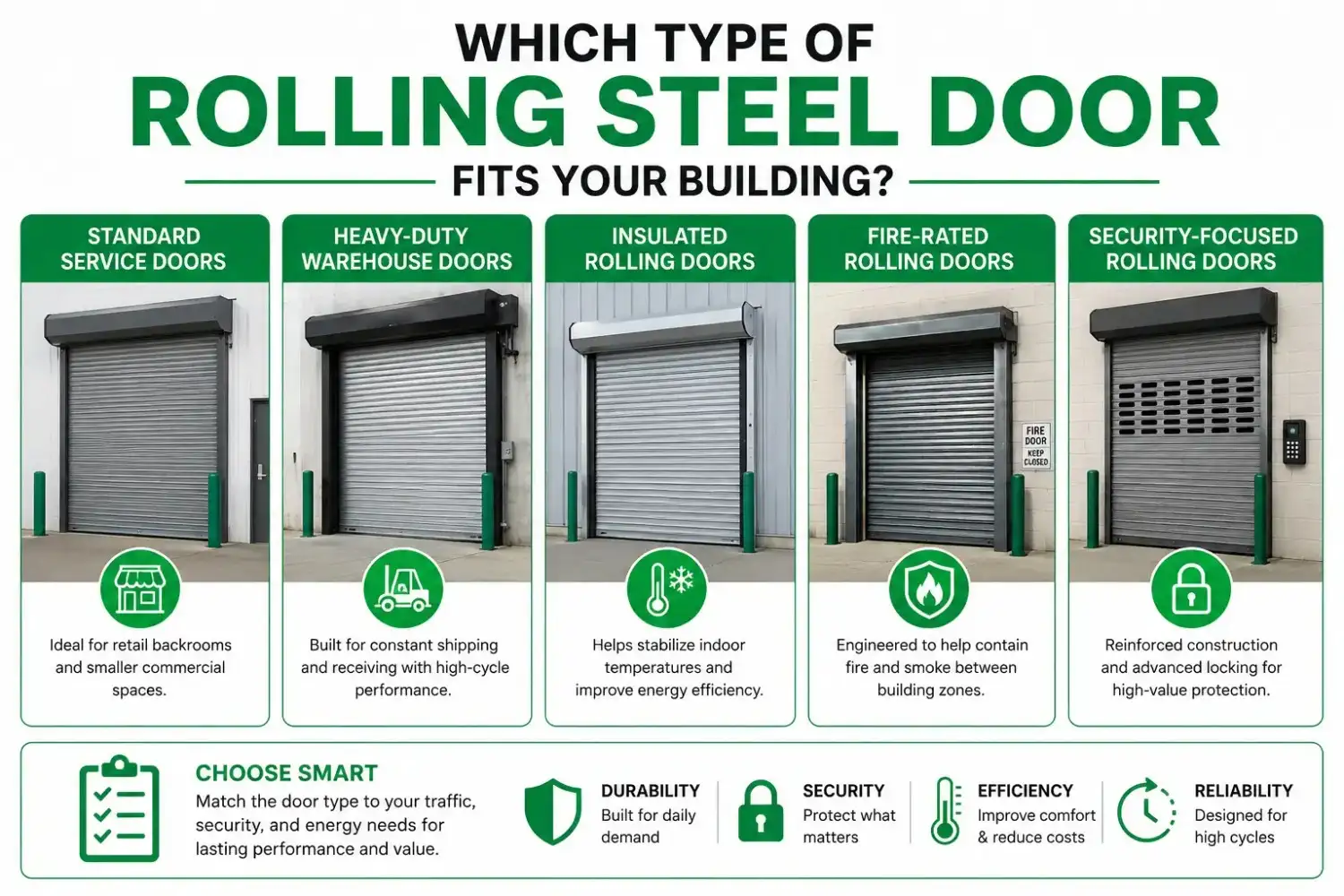
Standard service doors
work well for retail backrooms, maintenance shops, and smaller commercial properties with moderate daily use.
Heavy-duty warehouse doors
are built for constant shipping and receiving: thicker curtain gauges, stronger guides, and hardware rated for near-continuous operation. If your dock sees multiple trucks a day or nonstop forklift traffic, this category usually pays for itself over time.
Insulated rolling steel doors
Help stabilize indoor temperatures for climate-sensitive inventory or facilities trying to trim energy costs. They’re a common pick for distribution centers and cold-storage spaces.
Fire-rated rolling steel doors
are engineered to hold back fire and smoke between designated zones, which may be required depending on your building’s occupancy classification and layout.
Security-focused rolling steel doors
Add reinforced materials and upgraded locking or access-control systems for facilities storing electronics, pharmaceuticals, or other high-value goods.
What Factors Affect the Cost of a Commercial Roll-Up Door?
Pricing on a commercial rolling steel door varies based on curtain gauge, opening size, insulation, wind-load rating, motorization, and installation complexity. A basic service door on a light-traffic opening will cost less than a heavy-duty, insulated, motorized system built for a high-cycle dock. Because every facility’s specs are different, the most accurate way to budget is a site-specific quote rather than a flat number pulled from a chart.
What Is the Rough Opening for a Commercial Steel Door?
Rough opening requirements depend on the door’s width, height, headroom for the coil barrel, and side room for the guide tracks, plus any extra clearance needed for motorized operators. Because these specs shift based on manufacturer and door type, it’s worth having a technician measure your header, jamb, and floor conditions before finalizing plans. Getting this step wrong is one of the most common (and expensive) mistakes in commercial door projects.
What Building Codes Apply to Commercial Roll-Up Doors?
Commercial openings are typically subject to local building and fire codes covering fire separation ratings, wind resistance, egress requirements, and structural support for the header. Requirements vary by occupancy type and jurisdiction, so a door that meets code in one building may not automatically meet it in another. Common violations include undersized structural headers, blocked emergency egress paths, and skipping required inspections after installation, all avoidable with proper planning up front.
Installation: What to Expect and What to Ask
A rolling steel door installation typically involves verifying the structural header can support the coil assembly, mounting the guide tracks, installing the barrel and curtain, wiring the operator (if motorized), and testing the full cycle range before sign-off. DIY installation on a commercial-grade door is rarely advisable given the weight of the curtain and the safety systems involved. Before hiring an installer, ask about their experience with your specific door category, warranty terms, and post-installation service support.
Motorized Rolling Steel Doors: Are They Worth It?
For high-traffic dock doors, motorized operators cut down on manual strain and speed up cycling, which matters when trucks are on a schedule. They do add a maintenance component: chain drives, limit switches, and control boards need periodic checks, but for busy facilities, the time saved on each cycle usually outweighs the added upkeep.
How to Extend the Lifespan of Your Rolling Steel Door
A well-specified rolling steel door can last decades, but only with consistent care. Guide tracks should stay clear of debris, springs and cables need periodic inspection, and slats should be checked for dents or corrosion before small issues become operational failures. Annual professional service tends to catch wear early. A resource like What Is the Lifespan of a Garage Door walks through similar maintenance principles that apply across both residential and commercial systems.
How to Choose the Right Rolling Steel Door for Your Facility
Before requesting quotes, walk through this checklist:
- What’s your realistic daily cycle count?
- Do you need insulation for climate control?
- Are there fire-rating or wind-load requirements tied to your building’s location?
- What’s your security risk level: standard hardware or reinforced locking?
- Is motorization worth the investment for your traffic volume?
Be cautious of quotes that skip cycle ratings or gauge specifications entirely. Vague estimates often lead to doors that underperform once they’re in daily use. If you’re also weighing rolling steel against other commercial styles, our breakdown on rolling steel doors in Worthington covers a real-world comparison worth reviewing.
FAQs
Q.1 What are warehouse rolling doors called?
They go by several names: rolling steel doors, roll-up doors, coiling doors, or service doors, all referring to a steel curtain that coils into a barrel above the opening.
Q.2 What is the rough opening for a commercial steel door?
It depends on the door’s width, height, coil barrel headroom, and guide track clearance, which is why an on-site measurement is more reliable than a generic spec sheet.
Q.3 What building code applies to a commercial door opening?
Requirements vary by jurisdiction and occupancy type but generally cover fire separation, structural header support, wind resistance, and egress clearances.
Q.4 Do I need a fire-rated rolling steel door?
That depends on your building’s occupancy classification and layout; some interior zone separations require it, while others don’t.
Q.5 Are insulated rolling steel doors worth it for a warehouse?
For climate-sensitive inventory or facilities trying to control energy costs, insulated doors typically pay off through more stable indoor temperatures.
Q.6 Is a motorized rolling steel door better than a manual one?
For high-cycle openings, motorized operators reduce manual strain and speed up daily operations, though they do require periodic maintenance on the drive components.
Final Thoughts
The Door Guys has worked with Ohio warehouses and commercial property owners since 1996, helping them specify systems built for their actual daily use rather than a one-size-fits-all catalog pick. As residential and commercial door experts, we walk through cycle ratings, code requirements, and installation logistics before a single quote goes out.
Choosing a rolling steel door comes down to matching the product to your building’s real operating conditions: traffic volume, security exposure, climate needs, and local code requirements. Skipping that step is how facilities end up with doors that wear out early or need constant service calls.
If you’re planning a warehouse or commercial door project, reach out to our team for a site-specific assessment. It’s the fastest way to land on a door that actually fits how your building runs.