
Swinging garage doors need open space in front of the garage because the panels swing outward. Sliding garage doors need open wall space beside the opening because the panels travel sideways instead of up. Neither is “better”; the right pick depends on your driveway, your sidewall space, and how the garage gets used day to day.
Most homeowners never think past the standard overhead sectional garage door, and for a huge number of garages, that’s still the right call. But we get calls every week from people with detached garages, workshops, low ceilings, or older carriage-style buildings asking whether a side-hinged or side-sliding door would actually work better for their space. This guide walks through both, honestly, including where each one falls short.
Swinging or Sliding: What’s the Real Difference?
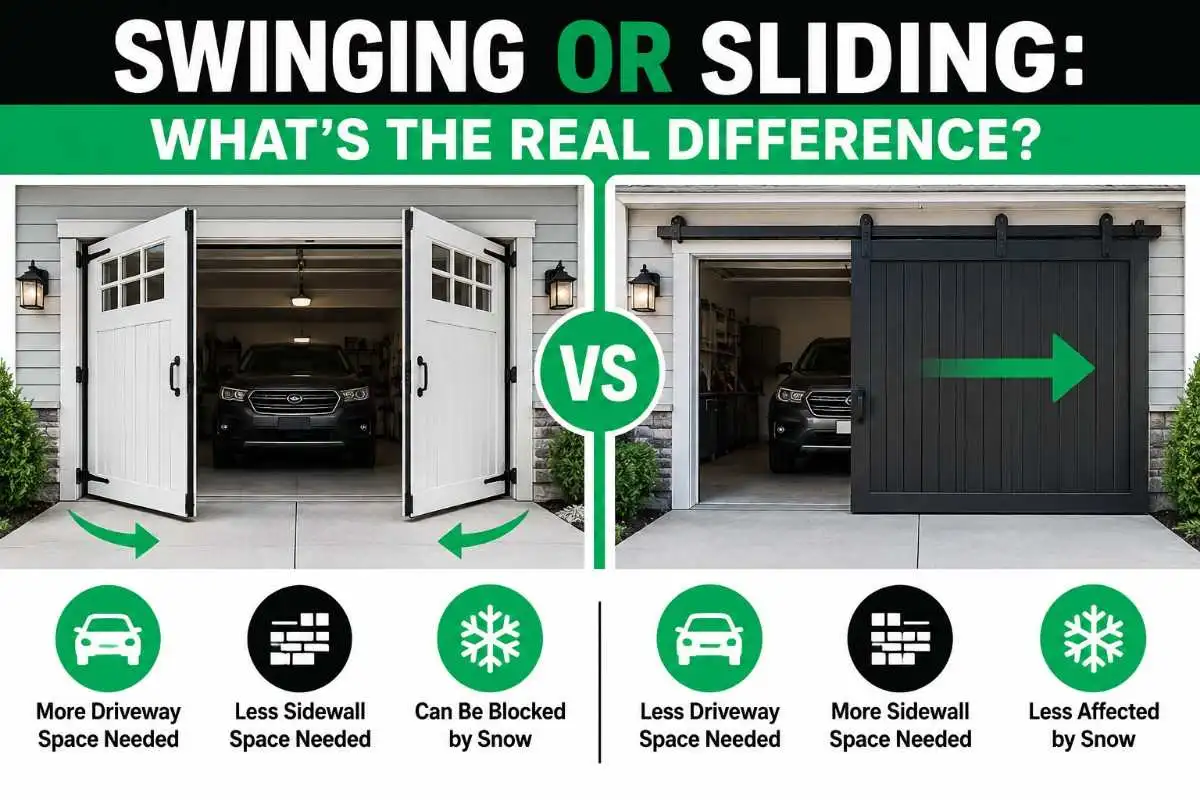
The decision usually comes down to one question: do you have more room in front of your garage, or beside it?
|
Factor |
Swinging / Side-Hinged | Sliding / Side-Sliding |
| Opening direction | Swings outward |
Moves horizontally |
|
Driveway clearance needed |
High | Low |
|
Sidewall space needed |
Low to moderate |
Significant |
| Overhead track | None |
None but needs sliding hardware |
|
Snow in front of door |
Can block the swing path | Less affected |
| Walk-in access | Very convenient |
Convenient if designed right |
|
Best fit |
Traditional garages, workshops |
Low-headroom or tight-ceiling garages |
If your driveway is short, swing-out clearance becomes the deciding factor fast. If your ceiling can’t fit a standard track system but you’ve got a long, clear wall beside the opening, sliding starts to make a lot more sense.
What’s the Actual Purpose of a Swinging Garage Door?
A side-hinged door exists to solve one specific problem: garage access without an overhead track. That matters more than it sounds.
- No ceiling clutter. No horizontal track running across the garage, which matters in workshops or garages with ceiling-mounted storage, lifts, or lighting.
- Simple pedestrian access. You can often open just one panel instead of raising the whole door.
- Appearance. Side-hinged doors are a natural fit for detached garages, older homes, and carriage-house builds where homeowners want the door to look like part of the structure rather than a machine bolted onto it. If that’s the look you’re after, our breakdown of what actually makes a door “carriage-style” is worth a read before you commit to hardware.
The catch: the door needs room to swing, full stop.
The Real Disadvantages of Swinging Garage Doors
Space is the big one, but it’s not the only one.
Anything sitting in the swing path stops the door cold: a parked car, a trash bin, a snowdrift, even a steep driveway lip. Winter makes this worse. If ice builds up right at the threshold, you’re shoveling before you can open the garage at all not exactly ideal at 6 a.m. before work.
The less obvious issue is sealing. A continuous, tight perimeter seal is something overhead systems do well by design. On a side-hinged door, the frame, threshold, hinge line, and the meeting point between the two panels all have to be built correctly, or you’ll feel it as a draft every winter. It’s fixable; it just has to be done right the first time, which is a big part of why installation quality matters more here than on a standard door.
Can You Actually Put a Sliding Door in Your Garage?
Yes, provided the wall beside the opening is clear enough for the panels to travel completely out of the way. Homeowners tend to measure the opening and forget the wall; that’s the mistake to avoid.
Before you commit, check:
- Total clear wall length beside the opening
- Obstructions: windows, outlets, shelving, light fixtures
- Track or roller mounting requirements
- What’s supporting the door’s weight
- Where the panels sit once fully open
“No overhead track” doesn’t mean “no hardware.” A sliding system still needs properly engineered tracks and guides; this isn’t a DIY-and-forget setup.
Is Sliding More Expensive Than Swinging?
There’s no flat answer, and honestly, anyone who gives you one number without seeing your garage is guessing. Cost depends on the opening size, materials, hardware complexity, structural changes, and automation. A sliding system often needs specialized tracks, rollers, and support hardware. A swinging door’s cost usually shows up in the frame, hinges, threshold, and weatherproofing rather than the panel itself.
Instead of comparing door types in isolation, ask about the whole installed system: Does the opening need modification? What’s supporting the door? How will it seal? What happens if it goes out of alignment down the road? Those answers matter more than the sticker price of the panel.
Side-Sliding Doors: The Honest Pros and Cons
Where they win:
- Work well with low headroom, where an overhead track genuinely won’t fit
- Keep the driveway completely clear; no swing arc to plan around
- Leave the ceiling open for storage, lighting, or shop equipment
- Give detached garages and workshops a distinct, non-standard look
Where they cost you:
- Eat up wall space; the panels have to go somewhere
- Depend heavily on correctly aligned hardware
- Can conflict with shelving, windows, or wiring already on that wall
- Need careful attention at the moving edges to avoid drafts and water intrusion
How Much Clearance Does a Swing-Out Door Actually Need?
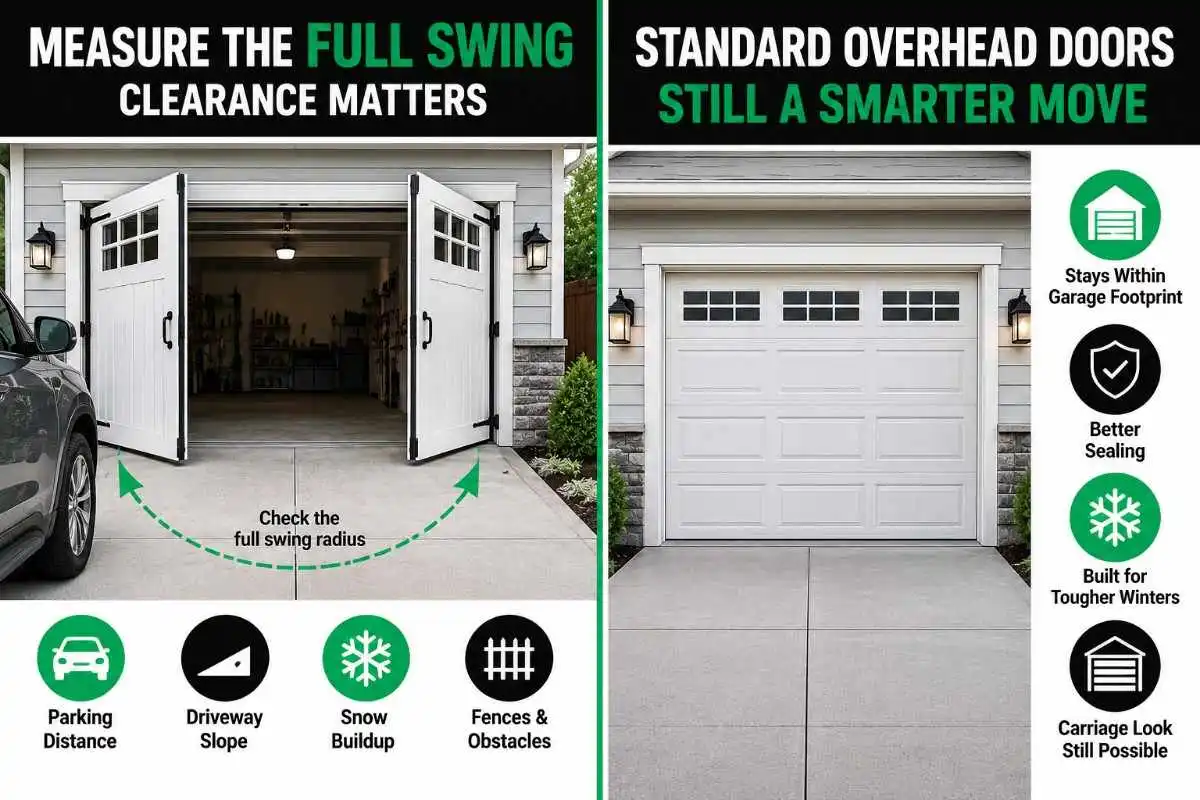
Don’t just measure driveway width; measure the full arc the door travels through. A car parked slightly off-center can still block a panel that “looks” like it has room.
Check the distance from the garage face to your normal parking spot, the full swing radius, any slope in the driveway, raised thresholds, where snow tends to pile up, and anything nearby like fences, posts, or landscaping. A short driveway doesn’t automatically rule out a swinging door it just means this measurement step isn’t optional.
When a Standard Overhead Door Is Still the Smarter Move
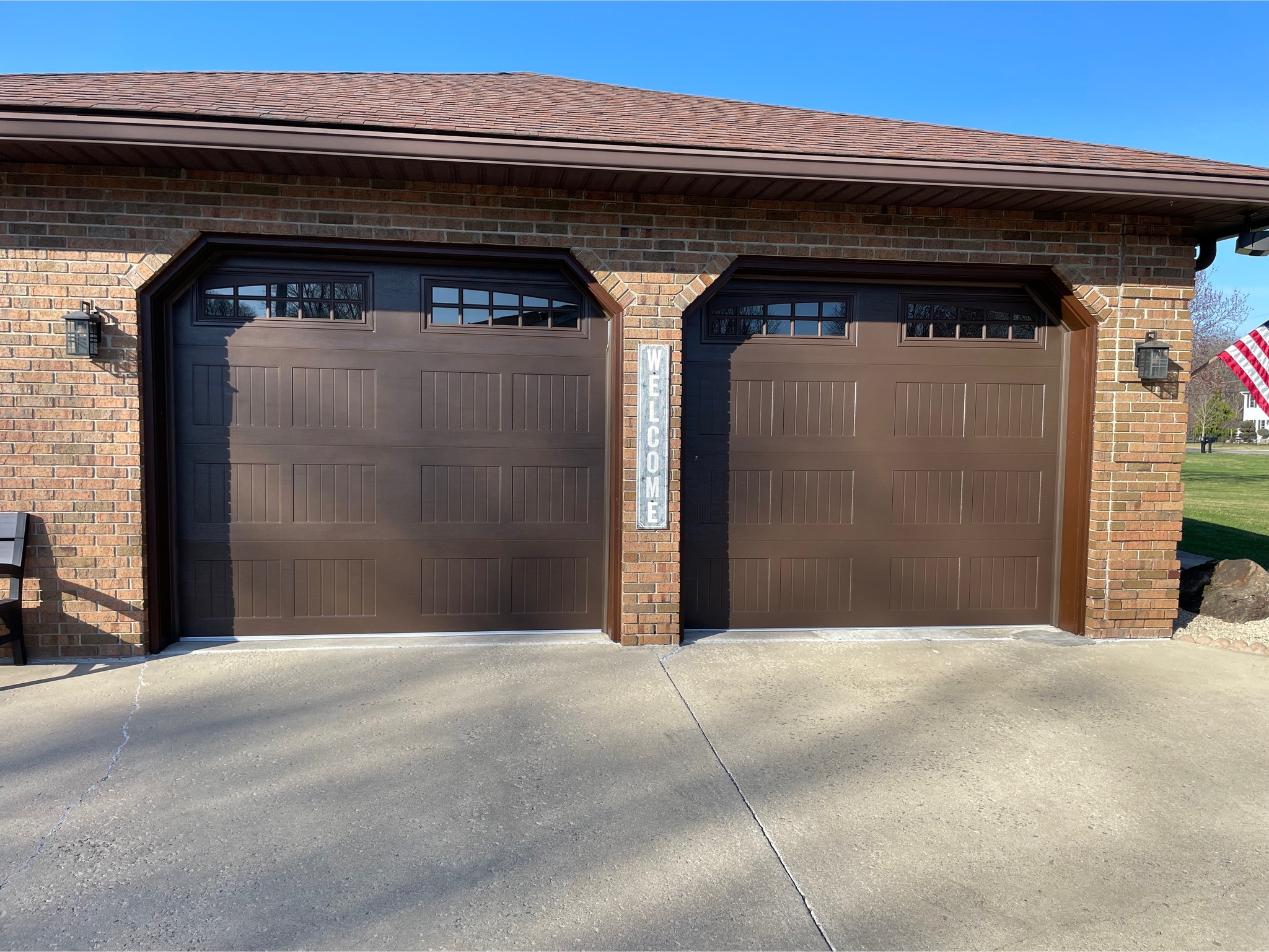
This is the part specialty-door pages tend to skip, probably because it’s not what they’re selling. If you’ve got normal ceiling height and a driveway where an outward swing would be a daily hassle, a standard overhead sectional door is usually still the better call. It stays within the garage’s own footprint, seals continuously around the full perimeter, and holds up reliably once temperatures drop, which, over a few Ohio winters of service calls, is where a lot of specialty doors start showing their weak points.
You can also get a carriage-house look without giving up an overhead operating system. The two aren’t the same decision, and it’s worth understanding the difference before you rule anything out.
Cold Weather: Which Door Actually Holds Up?
Neither style automatically fails in winter, but cold weather exposes weak installation fast. On a swinging door, ice in the swing path stops the door outright. On a sliding door, frozen or dirty hardware can bind the panel mid-track. Either way, it comes down to seals, drainage, alignment, and a properly built threshold, not the operating style itself.
Swinging vs. Sliding: A Simple Way to Decide
Choose swinging if: you’ve got open space in front of the garage, want a traditional or carriage-house look, value simple walk-in access, and your driveway layout allows a full outward swing.
Choose sliding if: your ceiling has limited headroom, you have real clear wall space beside the opening, and keeping the driveway swing-free matters more than the wall space it uses.
Stick with overhead if: you want proven, everyday reliability, full perimeter sealing, and a system that doesn’t ask you to plan your parking around it.
If your current door is sticking, drafty, or just wrong for how you actually use the garage, it’s worth having someone look at the whole system rather than guessing. Our maintenance and repair team can walk the space with you and tell you straight whether repair, replacement, or a different operating style makes sense.
The building should decide the door, not the other way around. That’s the approach The Door Guys has used on every install since 1996, and it’s usually a five-minute conversation to figure out which category your garage actually falls into.
FAQs
Q.1 Which is better, a swinging or sliding garage door?
Neither wins outright. Swinging doors need clear space in front of the garage; sliding doors need clear wall space beside it. Your layout, climate, and daily use decide which one actually works.
Q.2 Are sliding garage doors more expensive than swinging doors?
It depends on the full installed system hardware, structural changes, and automation, not just the door panel. Get a site-specific estimate rather than comparing sticker prices.
Q.3 Can I put a sliding door in my garage?
Yes, as long as there’s enough clear, unobstructed wall space for the panels to travel completely out of the opening, plus structural support for the hardware.
Q.4 What are the disadvantages of a swinging garage door?
Mainly the outward swing itself it needs consistent driveway clearance, can get blocked by snow or parked vehicles, and requires careful weatherproofing at the frame and hinge line.
Q.5 Do sliding garage doors work in cold weather?
They can, but frozen or dirty track hardware can bind the door. Regular hardware maintenance and a well-sealed threshold matter more than the operating style itself.
Q.6 How much sidewall space does a sliding door need?
Enough for the panel to clear the opening completely, plus room for the track and hardware. This varies by door size and configuration, so it’s worth measuring before you commit.