
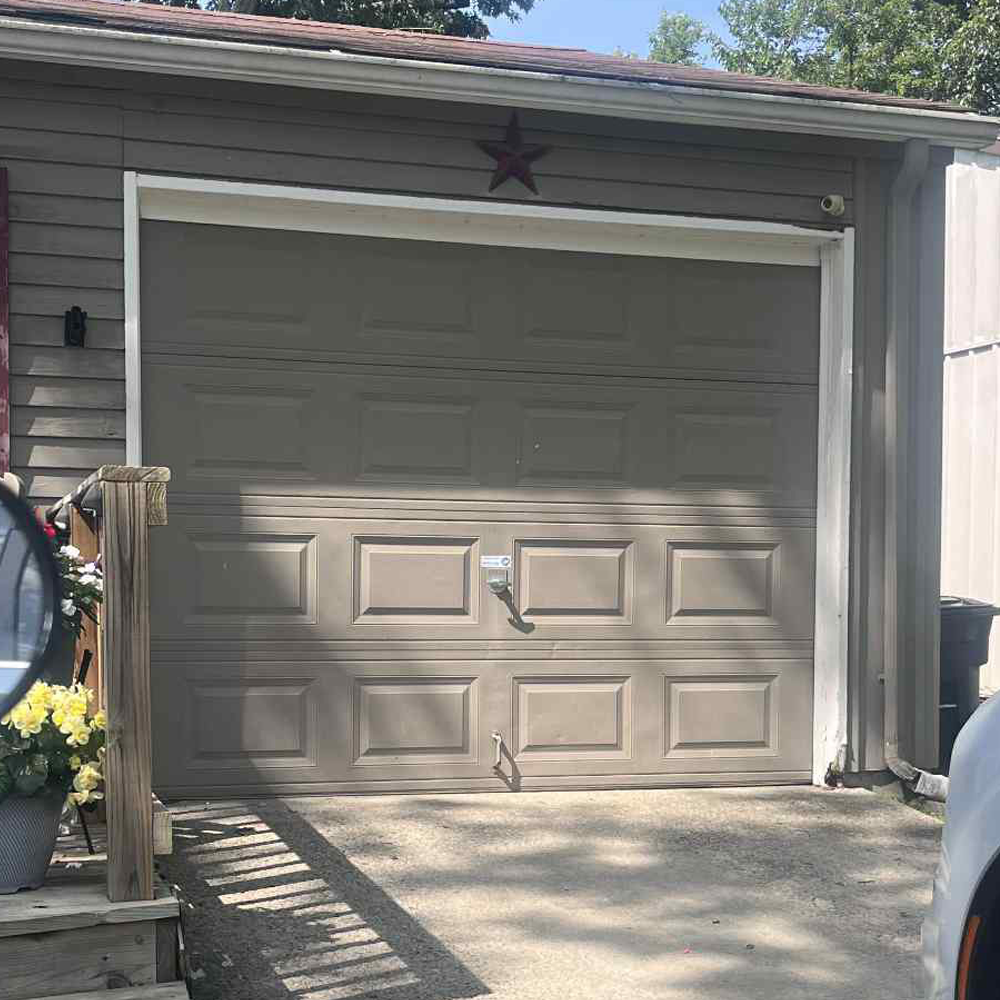
Most single-car garage doors measure 8 or 9 feet wide by 7 feet tall, while 16 feet wide by 7 feet tall is the go-to size for a two-car garage. Homes with trucks, SUVs, or roof racks are increasingly opting for 8-foot-tall openings instead. Before you order anything, measure your opening’s width, height, side clearance, headroom, and backroom, since even a small mismatch can throw off the whole installation.
What Are Standard Garage Door Sizes?
Not every garage opening is built the same, even though most homeowners assume there’s one universal size. A door that’s an inch or two off can cause uneven weather sealing, a noisy opener, or a track that never quite lines up right. That’s why pulling accurate measurements before you shop for a replacement is one of the smartest moves you can make.
Whether you’re swapping out an aging door, finishing a new build, or planning for a bigger vehicle, this guide walks through the most common garage door dimensions, how to measure your own opening, and when it makes more sense to go custom instead of standard. If you’d rather skip the guesswork entirely, get a professional measurement and garage door installation in Central Ohio quote and let a technician confirm the right fit for your home.
Garage Door Size Chart
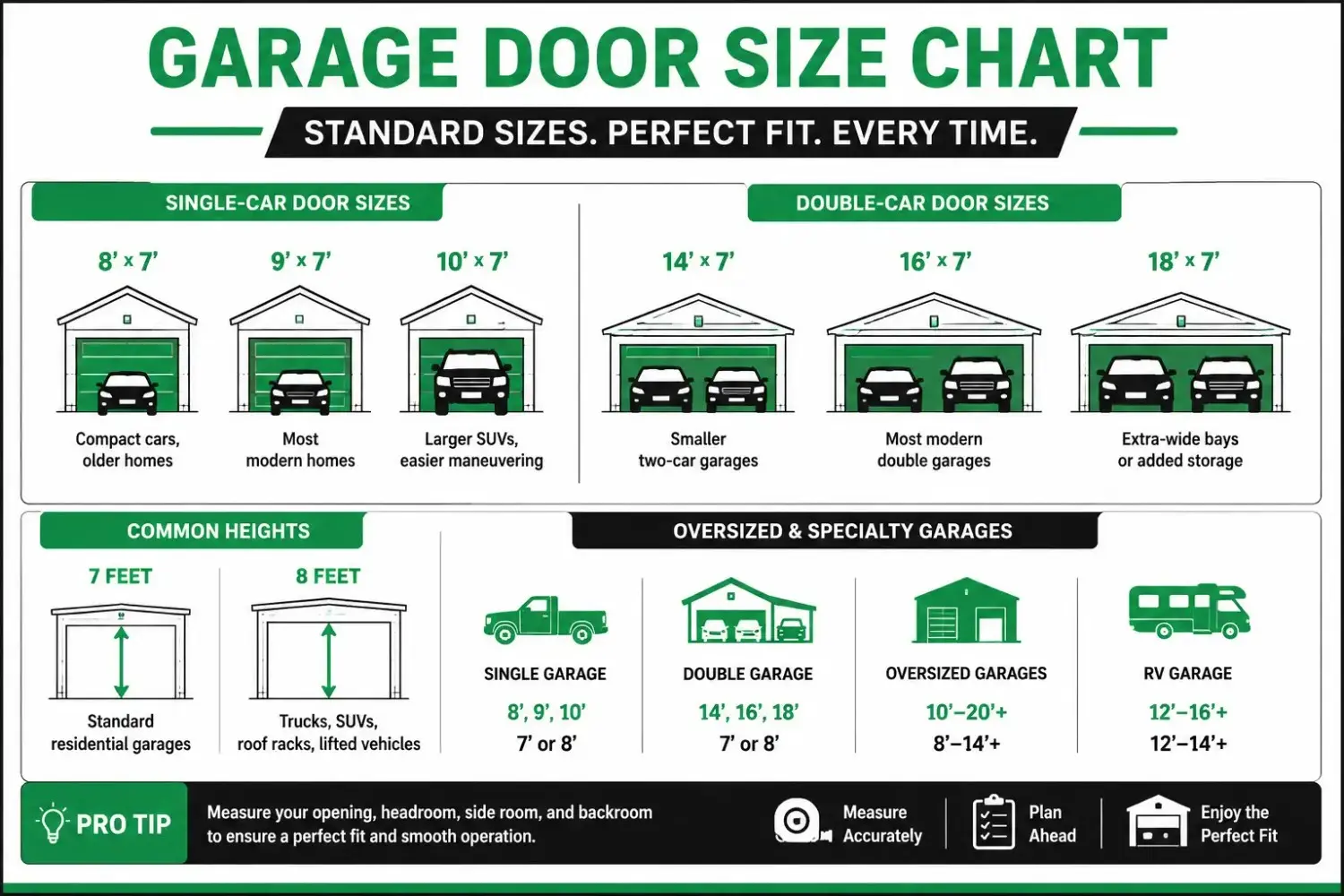
Manufacturers build most residential doors around a handful of standard widths and heights because they cover the majority of American homes.
Single-Car Garage Door Dimensions
| Door Size | Best For |
| 8′ × 7′ | Compact cars, older homes |
| 9′ × 7′ | Most modern homes |
| 10′ × 7′ | Larger SUVs, easier maneuvering |
Nine feet wide has become the default for newer construction simply because today’s vehicles are noticeably bulkier than the models from twenty years ago.
Double-Car Garage Door Dimensions
| Door Size | Best For |
| 14′ × 7′ | Smaller two-car garages |
| 16′ × 7′ | Most modern double garages |
| 18′ × 7′ | Extra-wide bays or added storage |
A 16×7 door remains the benchmark for new two-car garages since it gives two daily drivers enough room to pull in and out without squeezing past each other.
Common Garage Door Heights
| Height | Typical Use |
| 7 feet | Standard residential garages |
| 8 feet | Trucks, SUVs, roof racks, and lifted vehicles |
An 8-foot opening also builds in some flexibility if your household’s vehicles are likely to change over the next several years.
Oversized and Specialty Garages
| Garage Type | Common Width | Standard Height |
| Single Garage | 8′, 9′, 10′ | 7′ or 8′ |
| Double Garage | 14′, 16′, 18′ | 7′ or 8′ |
| Oversized Garage | 10’–20’+ | 8’–14’+ |
| RV Garage | 12’–16’+ | 12’–14’+ |
Oversized openings typically serve lifted pickups, cargo vans, boats, travel trailers, and workshop buildings. Rather than forcing a larger vehicle through a standard-sized door, many homeowners find it’s far more practical to choose custom dimensions that leave real clearance on every side.
How Wide Is a 10-Foot Garage Door and Is There a 12-Foot Option?
A 10-foot-wide door measures exactly 120 inches across, and it’s a solid pick for full-size pickups, larger SUVs, and vehicles carrying roof-mounted cargo. The extra width also helps in garages that double as storage for bikes, lawn equipment, or shelving along the walls.
Twelve-foot-wide doors aren’t a standard residential size, but manufacturers produce them regularly for specialty builds like detached workshops, boat storage, equipment buildings, and oversized single garages. If your garage does more than just park a car, that wider opening can make daily access noticeably easier without needing two separate doors.
How Do You Measure a Garage Door Opening the Right Way?
Getting the numbers right the first time saves a return trip and prevents ordering a door that simply won’t fit. A thorough measurement covers the whole garage, not just the opening itself, since the tracks, springs, and opener all need their own working space.
- Measure the width. Check from the finished inside edge on one side to the other, and take the measurement at a few different points to confirm the opening is actually square.
- Measure the height. Go from the garage floor to the top of the finished opening. If the floor isn’t perfectly level, note both the highest and lowest points.
- Check the headroom. This is the gap between the top of the opening and the ceiling, and it needs to be enough for horizontal tracks, springs, and opener hardware. Skimping here is one of the most common reasons standard equipment doesn’t fit as expected.
- Check the side room. Measure the wall space on both sides of the opening for vertical tracks and mounting brackets. Even a door that’s a textbook standard size can run into trouble if the side clearance is too tight.
- Measure the backroom. From the opening to the rear wall, the door needs enough depth to retract fully, and an automatic opener usually calls for a bit of extra space.
Quick DIY Measurement Checklist
- Opening width
- Opening height
- Left and right side clearance
- Headroom
- Backroom
- Floor levelness
- Ceiling obstacles like lighting, storage racks, or ductwork
Working through this list before you order helps you avoid delays or last-minute modifications once installation day arrives.
How Do You Choose the Right Garage Door Size for Your Vehicle?
For everyday sedans, crossovers, and mid-size SUVs, a 9×7 single door or a 16×7 double door usually covers everything comfortably. Households with a full-size truck, a lifted 4×4, or a vehicle with a roof box tend to do better with an 8-foot-tall opening, since that extra foot removes the guesswork around mirrors and roof-mounted gear.
Boat owners face a slightly different equation. A pontoon boat on its trailer can easily exceed a standard opening’s width and height once you factor in the bimini top or railing, which is exactly the kind of situation where a custom-sized door makes more sense than trying to squeeze into a standard one. The same logic applies to travel trailers and cargo vans: measure the tallest and widest point of what you’re storing, then add a margin for safe clearance, not just a snug fit.
For more on how different door styles pair with these standard openings, and sectional garage doors that fit these standard sizes, which remain one of the most popular styles for both single and double garages.
What Are the Most Common Garage Door Sizing Mistakes?
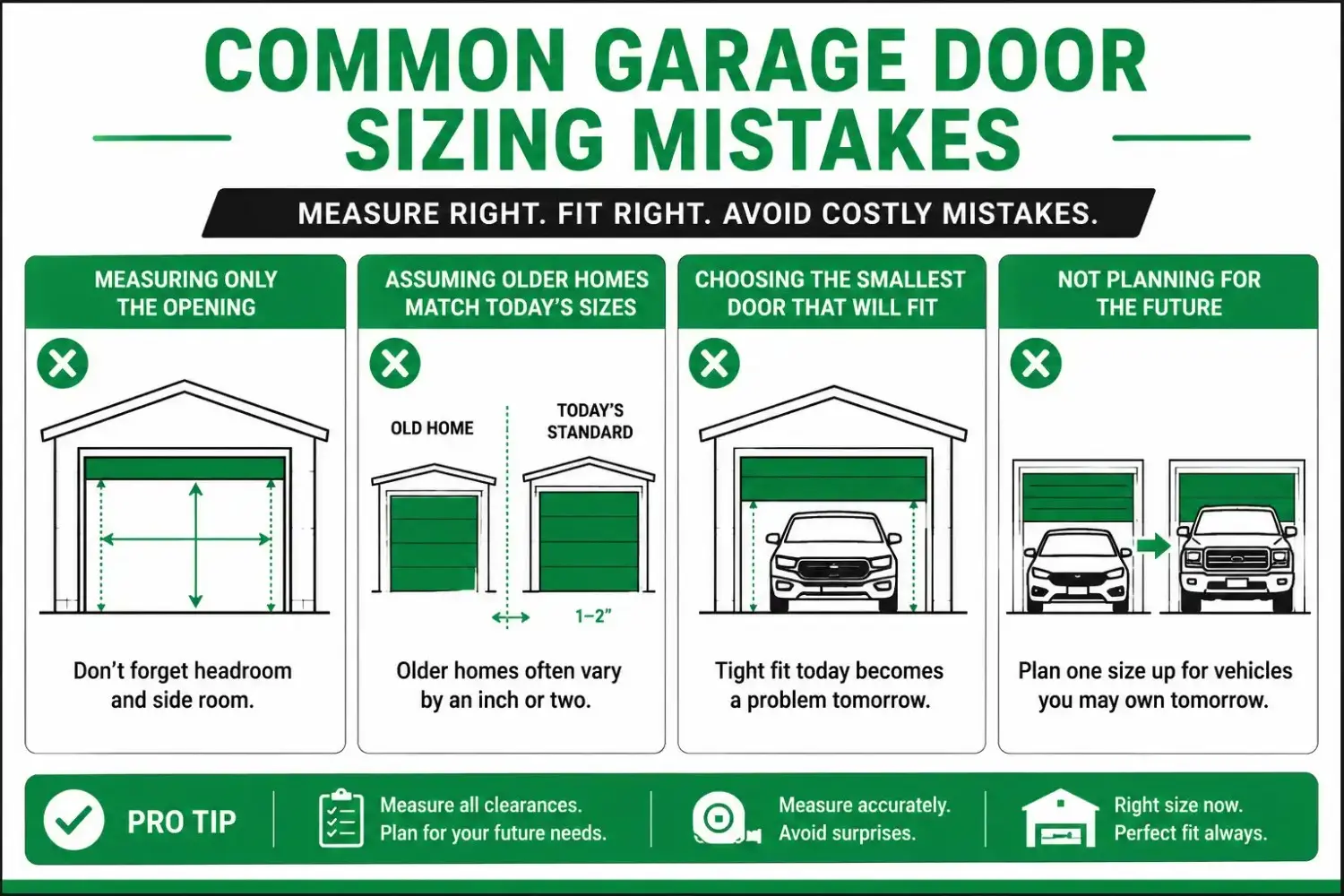
The most frequent mistake is measuring only the opening and skipping headroom or side room entirely, which then forces last-minute framing changes. A close second is assuming an older home automatically matches today’s standard sizes; many homes built decades ago have openings that fall an inch or two outside current manufacturing norms, so a fresh measurement is worth doing even if the door looks like a typical size.
Homeowners also sometimes choose the smallest door that will technically fit a current vehicle, only to upgrade to a larger truck or SUV a few years later and find the opening no longer works. Planning one size up, especially on height, tends to age better than optimizing for exactly what’s parked in the garage today.
If you’re weighing your options, it also helps to see typical garage door installation costs so you understand the full scope of the project before committing to a size or style.
Is 9×7 the Most Common Garage Door Size?
Yes, and it has been for most homes built over the last few decades. Nine feet wide by seven feet tall gives sedans, crossovers, mid-size SUVs, and most pickup trucks enough room without wasting wall space. If you’re replacing an existing door rather than building new, matching your current opening is usually the smartest starting point, though it’s still worth measuring first since older homes can vary from today’s standards.
Frequently Asked Questions
Q.1 What sizes do standard garage doors come in?
Single-car doors typically run 8 to 10 feet wide, while double-car doors run 14 to 18 feet wide, both usually paired with a 7- or 8-foot height.
Q.2 Does a garage door have to match the opening exactly?
Not exactly, but it needs to be close enough that installers can properly seal and frame the gap. A door that’s noticeably undersized or oversized usually means a custom order instead.
Q.3 What size garage door works best for a pontoon boat or larger trailer?
It depends on the trailer’s height and width with any accessories attached, but many boat owners end up needing a custom or oversized door rather than a standard 8- or 9-foot opening.
Q.4 How much headroom does a garage door opener actually need?
Most openers need at least 10 to 12 inches of headroom above the opening, though this varies by track and spring system, so it’s worth confirming before you order.
Q.5 What happens if my garage opening isn’t a standard size?
A custom door gets built to your exact measurements, which is common in older homes or additions where the framing doesn’t match today’s typical dimensions.
Q.6 Is a taller garage door worth it if I don’t currently own a truck or SUV?
Many homeowners choose the extra height anyway, since it adds flexibility for future vehicles and roof-mounted gear without requiring another replacement down the road.
Getting the Right Fit for Your Home
Standard sizes cover most homes, but “standard” doesn’t mean “one size fits all.” The safest approach is always to measure your opening, headroom, and side clearance before assuming your garage matches a chart. From there, you can decide whether a standard door works or whether a custom size will serve your vehicles and storage needs better over the long run.
Ready for the right fit? Contact The Door Guys in Marion for expert help in Columbus, Delaware, Dublin, and beyond, and get a door sized and installed the first time correctly.