
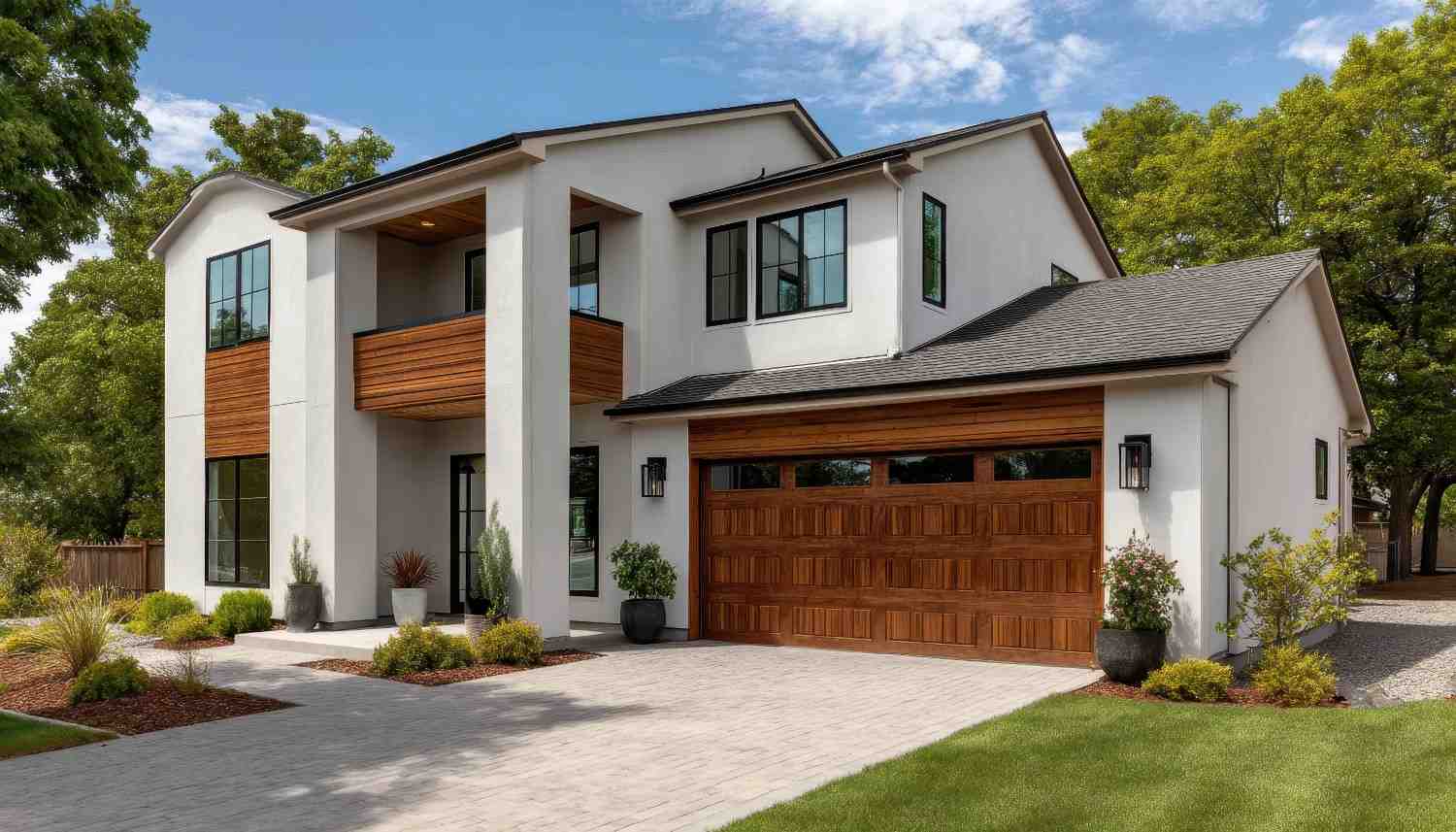
Love the warm look of timber but hate the sanding, staining, and warping? Faux wood garage doors fix exactly that. They are steel, aluminum, or composite doors finished to mimic real wood, so you get rich grain and tone without the yearly upkeep.
For Ohio homeowners dealing with freezing winters and muggy summers, that low-fuss toughness is a big part of the appeal. The finish stays consistent, the panels resist moisture, and your weekends stay free.
Yes, for most homes. A wood-look steel door delivers convincing grain, solid insulation options, and very little maintenance. The trade-offs are flatter-looking budget finishes and extra weight on some insulated models.
Are Faux Wood Garage Doors Worth It?
Yes, as long as you choose the right finish tier. Quality varies more than most shoppers expect, and the tier decides how real the door looks up close:
|
Finish tier |
How it’s made |
Up close |
Watch for |
|
Printed grain |
Wood image applied to a flat surface |
Smooth, can look flat |
Flatness and fading over time |
|
Embossed grain |
Texture pressed into the panel |
You can see and feel the grain |
Uneven fading on sun-facing sides |
|
Composite overlay |
Molded, wood-like faces over a steel frame |
Closest to real timber |
Extra weight and edge seams |
That is why metal garage doors that look like wood range from “nice from the street” to “wait, is that real?” Most wood-look models use the overhead sectional panel design.
The 10-second showroom test: Stand arm’s length from a sample and look for grain depth and slight panel-to-panel variation. A plastic-like shine, or the same knot repeating on every panel, is a red flag.
5 Reasons to Choose a Faux Wood Garage Door Over Real Wood
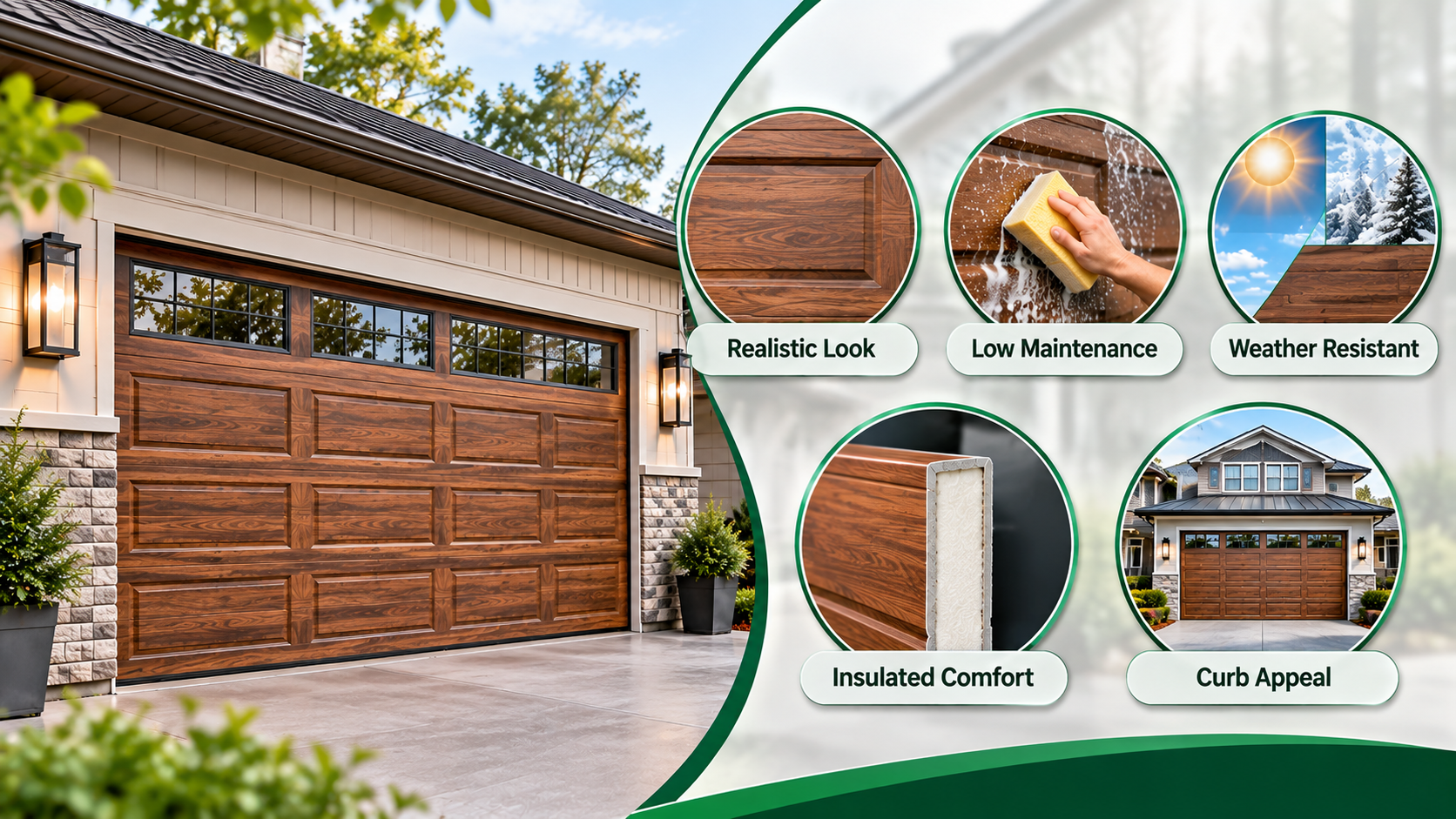
A realistic, consistent look
Embossed or overlay faces read as timber from the curb, and every panel matches, so you skip the knots, color patches, and mismatched sections that can appear on real wood.
Far less maintenance
There is no staining, sealing, or sanding. A gentle wash and a seasonal look at the finish usually cover it.
Strong weather and pest resistance
Steel and composite skins don’t swell, split, or rot, and termites have nothing to eat.
Comfort options
Wood-look finishes can sit on insulated cores, and many insulated models run quieter than hollow, single-layer doors.
Design flexibility and lasting value
Tones from light cedar to deep espresso, plus window layouts, let you match siding and trim. Garage door replacement has often ranked among the better-returning exterior projects in annual remodeling cost-vs-value reports.
Faux Wood Garage Door Cons: 5 Downsides to Know Before You Buy
Cheaper models can look flat up close
Printed finishes show their limits at eye level. Choose an embossed or overlay finish and view a full-size sample outdoors.
They usually cost more than plain steel
You are paying for the finish, so the upgrade suits a door people see every day. Compare finish tiers on the same model, not across unrelated brands.
Repairs are limited
Deep gouges can’t be sanded and refinished like real wood, so a damaged section is often replaced. Ask whether matching panels will stay available and what the warranty covers.
Weight matters
Thick insulated overlay panels can strain an older opener and springs. Confirm the door’s weight and your opener’s rating before you order.
The finish is set at the factory
You can’t restain it to a new color the way you can with real wood, and sun-facing sides may fade unevenly. Pick a tone you will still love, and favor solid fade protection.
If you want true wood patina that deepens with age, or your neighborhood rules require real wood, a faux option may not fit. Check local rules before you order.
Faux Wood vs Real Wood Garage Doors: Which One Wins Day to Day?
| Factor |
Faux wood |
Real wood |
|
Maintenance |
Rinse and inspect |
Regular sanding, sealing, refinishing |
|
Weather durability |
Strong against moisture |
Can swell, warp, or rot |
|
Lifespan |
Long with basic care |
Depends heavily on upkeep |
|
Weight |
Moderate to heavy |
Often heavy |
|
Upfront look |
Realistic, consistent |
Truly natural, varies |
Real wood wins on authenticity. Fake wood garage doors win on everything you’ll live with for years.
Why Are Faux Wood Garage Doors So Popular in 2026?
Wood-look has quietly taken over the outside of the home. Siding, decking, fencing, and window frames now come in wood grain with none of the upkeep. The garage door fills a big share of the front view, so it is often the one piece that no longer matches. Four things are driving the trend:
The finishes finally look real
Older doors used a printed image on a flat panel, which is why many looked fake. Embossing adds texture you can see and feel, and composite overlays add molded depth. The result holds up when you are standing in the driveway, not just driving past.
Nobody wants another weekend project
Real wood needs regular sanding, sealing, or refinishing to handle sun, rain, and humidity. A wood-look door has a factory-applied finish, so care is a gentle wash and a quick check of the edges. For busy households, that trade is a big part of the appeal.
One look, many styles
Clean horizontal lines suit modern homes, while bolder grain suits farmhouse and craftsman ones, including styling inspired by carriage houses. Window layouts add another way to adjust the style. You don’t have to choose between the look you want and a door that fits your home.
Matching is easier
Tones run from light cedar to deep espresso, so you can echo your siding, trim, shutters, or front door. Factory finishes are consistent from panel to panel, so a two-car or three-car set looks uniform. Hold a sample next to your siding in daylight before you decide.
What Makes One Faux Wood Door Cost More Than Another?
The finish drives the number more than anything else, and we quote after seeing your opening rather than guessing from a chart. For the bigger picture, see what goes into installation pricing, from door size to labor. These factors are specific to wood-look doors:
- Finish tier: Printed, embossed, and overlay finishes are built differently, so each sits at its own level.
- Factory finish versus custom color: A factory finish is consistent, while special color matching adds steps.
- Grain and tone: Deeper walnut and espresso tones or richer grain can sit in higher-spec lines.
- Windows and glazing: The glass style affects the build.
- Repair approach: Overlay panels can often be replaced section by section.
Steel, Aluminum, or Composite: Which Holds the Wood Look Best?
For a wood look, insulated steel with an embossed or overlay finish is the practical pick for most homes, because the grain survives dings and daily use. A wood-look steel garage door also offers the widest choice of tones and styles. For the insulation side of the decision, see how insulated garage doors perform before you settle on a panel build.
Aluminum is another route. Aluminum garage doors that look like wood resist rust and suit modern or full-view styles, though they dent more easily. Composite overlays sit in between, with the deepest grain at a heavier weight. Whatever you choose, learn how R-value measures insulation so spec sheets make sense.
How Long Will a Faux Wood Finish Last, and How Do You Care for It?
Many last well over a decade, and often much longer with simple care. Finish quality, panel construction, and sun exposure matter most. The finish isn’t the only thing that wears, though. For springs, rollers, and openers, see how long garage doors really last.
Freeze-thaw is the quiet test. Water that sneaks into seams freezes, expands, and slowly lifts overlay edges or cracks the finish. A door starts looking fake when the grain fades unevenly, the color chalks, or the edges peel. Catch it early, and a replacement section beats waiting.
A finish-focused routine keeps the grain looking fresh:
- Spring and fall: Wash with mild soap, a soft cloth, and water. Skip abrasive pads.
- Each season: Look for chalky patches or uneven fading, especially on sun-facing panels.
- After winter: Run your hand along the bottom edge and lower corners, and check for swelling, flaking, or lifted overlay.
- Yearly: Inspect panel edges for chips, dents, or peeling, and touch up only with a manufacturer-approved product.
- Once: Read your finish warranty, because some limit which cleaners and touch-up products you can use.
Frequently Asked Questions
Q1. Are faux wood garage doors good?
Yes. They give you the wood aesthetic with far less upkeep, especially in embossed or composite-overlay finishes.
Q2. How much do faux wood garage doors cost?
It depends mostly on the finish tier, plus windows and how the door is built. A free, on-site estimate gives you the clearest answer.
Q3. Do faux wood doors feel like real wood?
It depends on the tier. Printed finishes feel smooth, embossed ones have texture you can feel, and composite overlays come closest to the touch of real timber.
Q4. Can you paint or restain a faux wood door?
It depends on the door. Some composite lines accept paint or stain, others are paint-grade only, and factory-finished steel usually needs maker-approved products. Ask before you buy, and check the warranty first.
Q5. What is the best material for wood-look garage doors?
For most homes, insulated steel with an embossed or composite-overlay finish, because it is durable and easy to maintain. Aluminum and full composite suit narrower needs.
Q6. Do faux wood garage doors hold up in freezing winters?
Yes, when the finish and edge caps are good quality. Wipe away standing moisture in fall and winter so ice does not build up along the panel edges.
Want the Wood Look Without the Work? Let’s Measure Your Opening
Choosing between wood-effect garage doors and other styles is easier with someone measuring your opening. Our team will check your opener, recommend the right finish tier, and confirm current availability. Request a free door estimate, and we’ll take it from there.