

You press the remote, and nothing moves. The cold is the trigger, but it’s rarely the real cause. It exposes weak spots: water that froze under the door, grease that went stiff, a battery running low, or a spring that was already tired. This guide shows you how to tell which one you have.
A garage door won’t open in cold weather most often because the bottom seal froze to the floor, the grease thickened, a battery weakened, or a worn spring failed. Pull the red release cord and lift the door by hand. If it rises easily, it’s ice, grease, or the opener. If it feels extremely heavy, stop and call a pro.
Garage door problems in cold weather peak on the first hard freeze, and forcing the door is what turns a small fix into a big bill, which is why seasonal maintenance and repair checks matter before winter sets in.
What Causes a Garage Door to Not Open in Cold Weather?
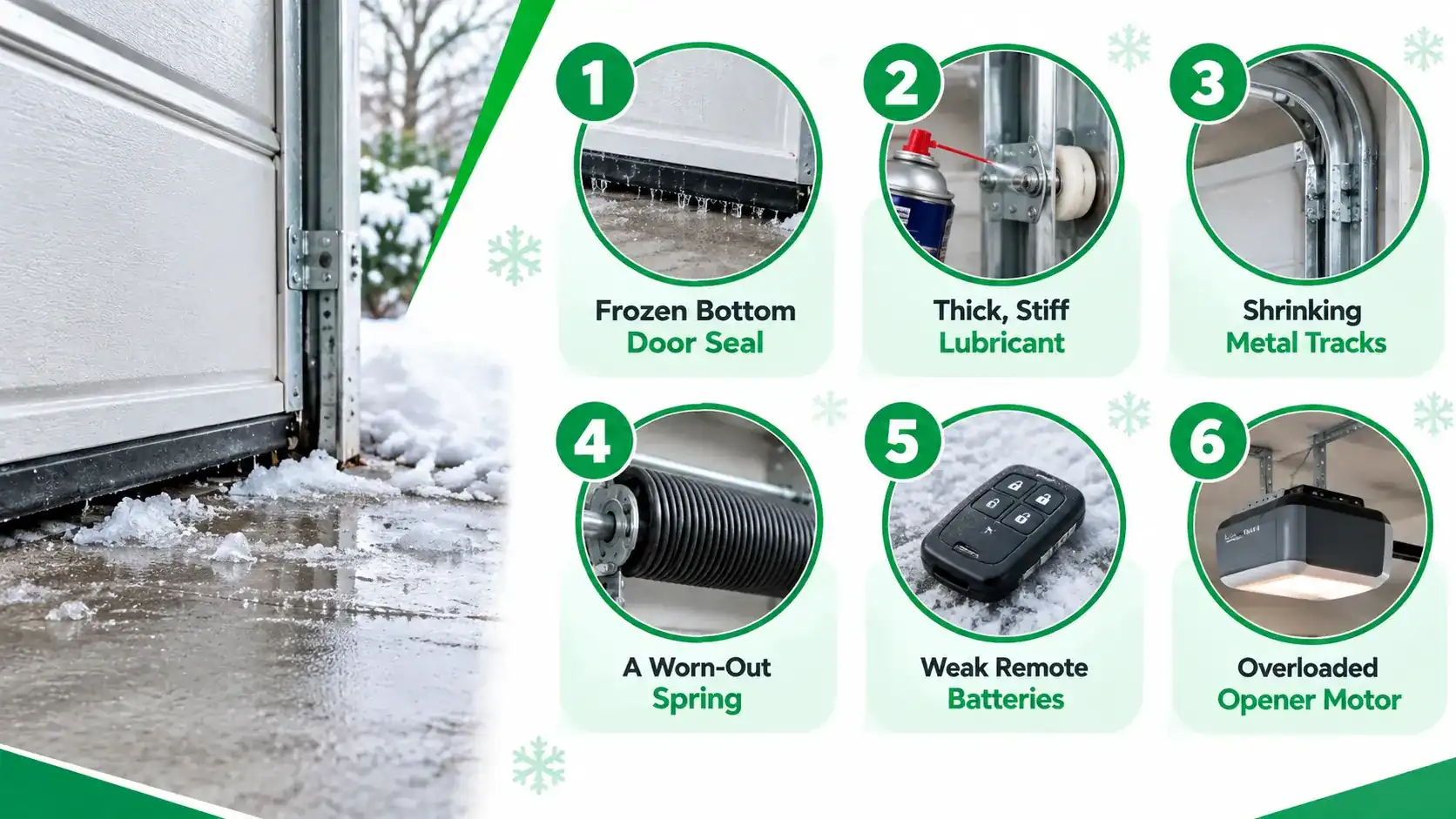
Each cause has a different reason behind it, which is why each needs a different fix.
Frozen Bottom Door Seal
Slush and car drip leave the rubber damp, and it freezes to the concrete overnight. In Ohio winters, daytime melt refreezes after dark, so a garage door frozen shut is often a morning-only problem.
Thick, Stiff Lubricant
Grease behaves like honey in a fridge: the colder it gets, the slower it flows. Many standard greases stiffen in the teens, so rollers and hinges drag.
Shrinking Metal Tracks
Steel tracks and brackets contract slightly in the cold, so a door with borderline alignment starts rubbing at one point.
A Worn-Out Spring
Springs wear out from use, not weather, but cold steel is less forgiving, so a worn spring often snaps on the first freezing morning.
Weak Remote Batteries
Cold slows the chemical reaction inside a battery, so a remote that worked in fall may lose range.
Overloaded Opener Motor
Stiff parts add drag, so the motor works harder, and its built-in protection may shut it off
Symptoms guide:
|
What you notice |
Likely cause |
DIY or pro? |
|
Motor hums, ice on the floor |
Frozen bottom seal |
DIY |
|
Wall button works, remote doesn’t |
Weak remote battery |
DIY |
|
Slow, squealing, or jerky door |
Thick lubricant |
DIY |
|
Scraping at the same spot |
Binding track |
Pro |
|
Loud bang, very heavy door |
Broken spring |
Pro |
|
Motor runs, then stops |
Opener overload |
DIY check, then pro |
Is It Frozen or Is the Spring Broken? The 60-Second Pull Test
This test sorts most cases before you touch a tool.
- With the door fully closed, pull the red emergency cord to disconnect the opener.
- Lift the door by hand to about knee height, then let go slowly.
Now compare what you feel:
|
What you feel |
What it usually means |
Next step |
|
Lifts easily and stays put |
Springs are fine |
Check for ice, grease, or the opener |
|
Drags or squeals |
Thick lubricant or binding track |
Clean and re-lubricate |
|
Very heavy, or drops when released |
Weak or broken spring |
Stop and call a pro |
|
Won’t lift at all |
Frozen seal or jammed track |
Thaw the seal, then test again |
If the door lifts fine but still acts up, the cause may be one of the common door and opener faults unrelated to the cold.
How to Fix a Garage Door That Won’t Open in Cold Weather
Match the fix to your cause, and work gently.
How to open a frozen garage door
- Stop pressing the remote and unplug the opener. Repeated tries overheat the motor and wear the gears.
- Chip loose ice with a plastic scraper. Metal tools gouge the rubber.
- Pour warm water, not boiling, along the seal. Boiling water can crack glass panels and refreeze fast.
- Use a hair dryer on low for stubborn spots, and keep it moving.
- Dry the seal and floor so it can’t refreeze.
- Lift gently, then run the opener once the door moves freely.
Fix thick lubricant
- Wipe off gummy grease from the rollers, hinges, and spring coils.
- Apply a silicone-based garage door spray, and check its label for low-temperature use. Skip WD-40, which is a solvent, not a lasting lubricant.
Fix a weak battery or a garage door opener not working in cold weather
- Replace the remote battery and the keypad’s 9V battery if you have one.
- Keep the remote inside the cabin or your coat, not in a freezing glovebox.
- Check that the opener is plugged in and the outlet works.
- If the motor hums but the door won’t move, the problem is mechanical, so do the pull test.
- After any opener adjustment, test the auto-reverse with a 2×4 flat on the floor.
Open the door manually from outside
- Only doors with an outside keyed release allow this. Most don’t, so enter through the house and pull the red cord inside.
- Lift from the bottom edge with both hands.
- Never pull the cord with the door already open. A weak spring can let it drop.
What not to do
- Don’t force a frozen door. It can tear the seal, strip opener gears, or bend a panel.
- Don’t use rock salt, a torch, or boiling water.
- Don’t touch springs, cables, or bottom brackets. They’re under high tension.
When Should You Stop and Call a Professional?
Call right away if you notice any of these:
- A loud bang followed by a door that won’t lift
- A visible gap in the spring above the door
- A door that feels extremely heavy even after the ice is gone
- Frayed cables, or a door that is crooked or off its track
- A motor that hums but doesn’t move the door
Spring and cable repairs need the right tools and training, which is why the industry’s own safety advice says to leave them to trained technicians. We’ll quote the price before any work begins.
How Can You Stop It From Happening Again?
- Wipe the clean, dry seal with silicone spray so water beads off instead of freezing on.
- Before winter, focus on keeping door parts well lubricated so rollers and hinges don’t stiffen.
- Sweep water and slush from the threshold before nightfall.
- Change remote and keypad batteries in the fall.
- Lift the door halfway with the opener disconnected. If it drifts down, the springs need attention.
Frequently Asked Questions
Q1. Why won’t my garage door open in cold weather?
Usually a frozen seal, thick grease, a weak battery, or a worn spring. Check the floor for ice, then do the pull test.
Q2. Why is my garage door not opening in winter even though the opener runs?
If the motor runs but the door stays put, the cause is mechanical: ice at the seal, a jammed roller, or a broken spring.
Q3. Is it safe to use hot water on a frozen door?
Warm water is fine on the seal. Boiling water can damage the rubber and glass, and it refreezes fast. Dry the area afterward.
Q4. Do openers work in freezing weather in Ohio?
Yes, but batteries weaken, and the motor works harder against stiff parts. Fresh batteries and lubrication keep them reliable.
Q5. Can cold weather break a garage door spring?
Springs wear out from use. Cold makes the steel less forgiving, so a spring near the end of its life often fails on a freezing morning.
Conclusion
Most cold-morning failures are ice, grease, or a weak battery, and you can fix them safely with patience. A gap in the spring, a loud bang, or a very heavy door means stop. Not sure which you have? Book a repair visit today, and we’ll get you moving.
Who’s Behind This Guide?
This guide comes from our family-run local service team, in business since 1996 and serving homes and businesses across central Ohio.