
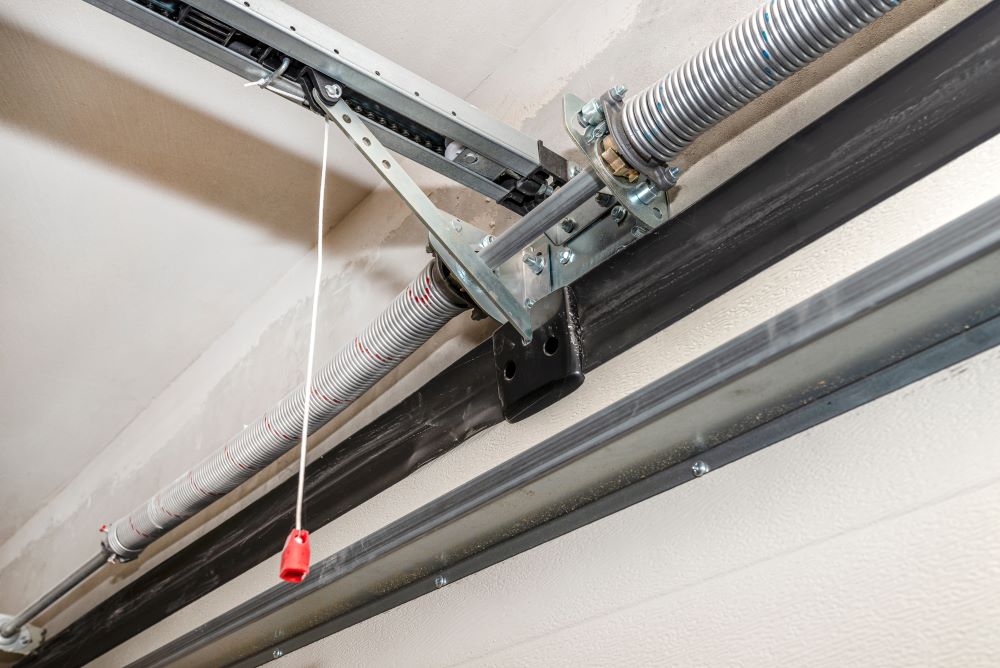
You press the button, hear that familiar hum, and… nothing. The door sits there. That sound coming from your LiftMaster opener is not a random glitch; it means the motor is receiving power and trying to do its job, but something is stopping it.
Before you press that button a dozen more times, stop. Repeated attempts can push a fixable problem into a full system failure. This guide walks you through what that hum actually means, the most likely causes, and what you should and should not do next, including when it’s time to have a technician diagnose the issue.
What Does a Humming Garage Door Opener Actually Tell You?
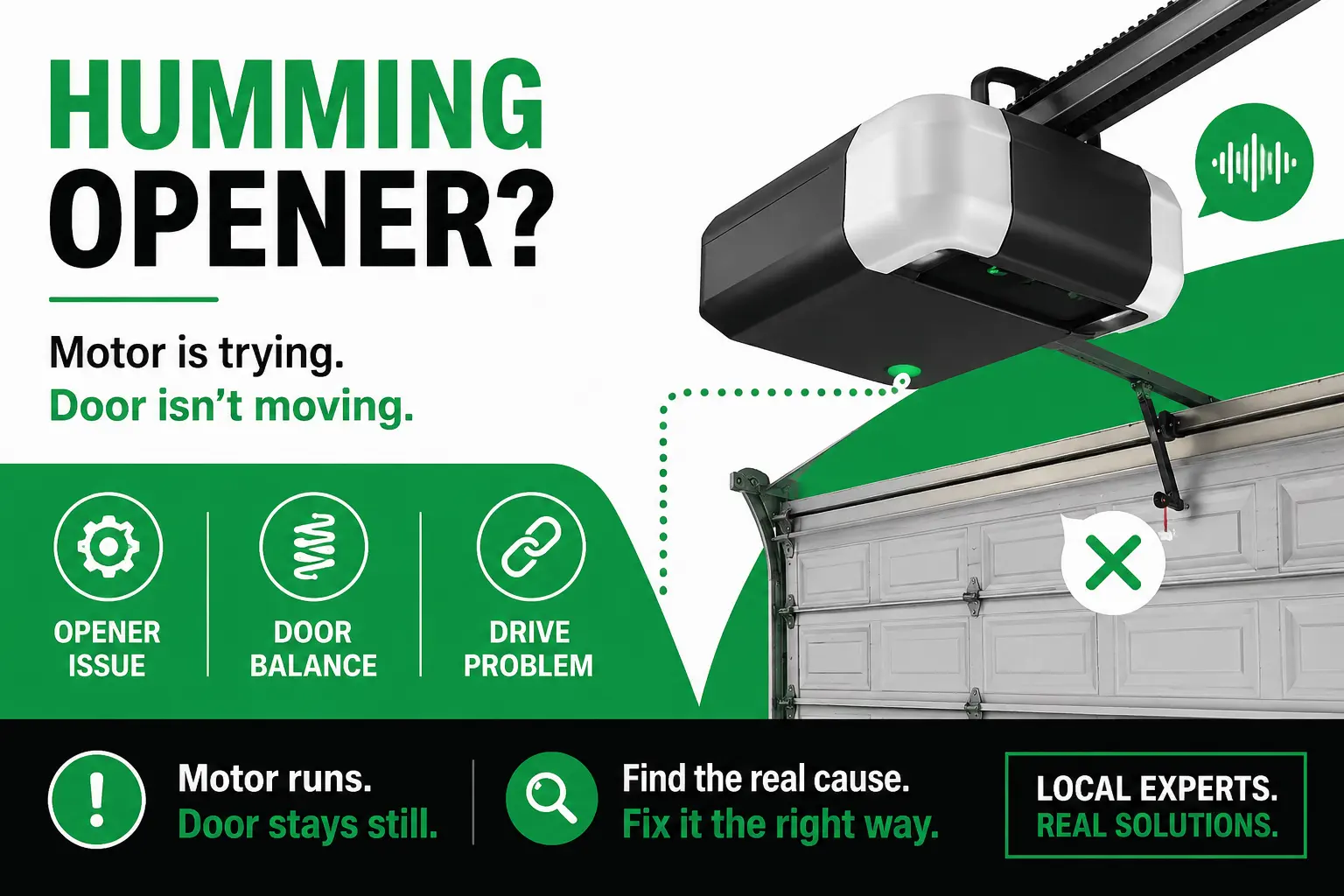
A humming sound from a LiftMaster unit is the opener’s way of saying it got the signal and tried to respond. The motor is energized. But the movement isn’t reaching the door.
That gap between “motor trying” and “door moving” is where the problem lives, and it’s often when to schedule garage door repair before a minor issue becomes a major one. It could be inside the opener itself, a worn gear, a failing capacitor, or a logic board issue—or it could be entirely outside the opener, in the door’s counterbalance system or the drive assembly. This distinction matters more than most people realize. A technician who inspects only the opener and ignores the door’s balance isn’t giving you the full picture.
The Most Common Reasons a LiftMaster Opener Hums but Won’t Move the Door
Stripped or Worn Internal Gear: The plastic drive gear inside many LiftMaster openers takes a lot of wear over the years. When it strips, the motor runs freely but never engages the drive system. You’ll often hear grinding alongside the hum.
Disconnected Trolley or Carriage: If someone pulls the emergency release cord intentionally or accidentally, the trolley disconnects from the door. The opener runs normally, but the connection to the door is gone. Reconnecting the trolley while the door is fully closed usually solves this.
Broken or Compromised Spring: This is the one that surprises most homeowners. A failed torsion or extension spring can make the door dramatically heavier than the opener was designed to handle. The motor hums and strains as it attempts to lift a door that now weighs two or three times what it should. If you heard a loud bang before this started, or the door only rose a few inches before stopping, a broken spring is the likely cause. Our detailed breakdown on garage door spring repair covers what happens when this component fails and why it affects the whole system.
Jammed Rail, Chain, Belt, or Screw Drive: Debris in the track, a kinked chain, or a damaged belt can all create enough resistance to stop drive movement while the motor keeps humming.
Failing Motor Capacitor: The capacitor gives the motor its starting boost. When it weakens, the motor hums at startup but can’t generate enough torque to actually move anything. This is a parts-level repair that doesn’t require replacing the whole unit.
Logic Board or Electrical Issue: Control boards can fail from power surges, moisture, or age. The unit may respond to button presses with a hum while the actual drive signal never reaches the motor properly.
Door Binding in the Tracks: A bent track section, a damaged roller, or hardware that has shifted over time can cause the door to bind. The opener senses resistance and shuts down or simply can’t overcome it.
What Can You Safely Check Before Calling?
There are a few things you can look at without any tools or mechanical experience.
First, visually inspect the track and rail. Look for an obvious obstruction: a tool, a piece of debris, a bent section near a roller.
Next, check whether the emergency release cord has been pulled. If the trolley is disconnected, reconnect it only when the door is fully closed and you’re certain there’s no tension on the counterbalance system.
Then test the door manually. Disconnect the opener by pulling the red release cord while the door is completely closed. Try to lift the door by hand. A properly balanced door should rise smoothly and stay open at about chest height without you holding it.
If the door feels unusually heavy, falls quickly, or won’t stay up, stop there. That’s a strong signal that the problem is in the counterbalance system, not the opener. Understanding how long garage door springs last can help you recognize whether yours may have simply reached the end of their service life.
Never attempt to adjust, loosen, or remove high-tension components, including the garage door’s counterbalance system and cables. These parts are under extreme tension and can cause serious injuries if mishandled.
Why a Broken Spring Makes the Opener Hum
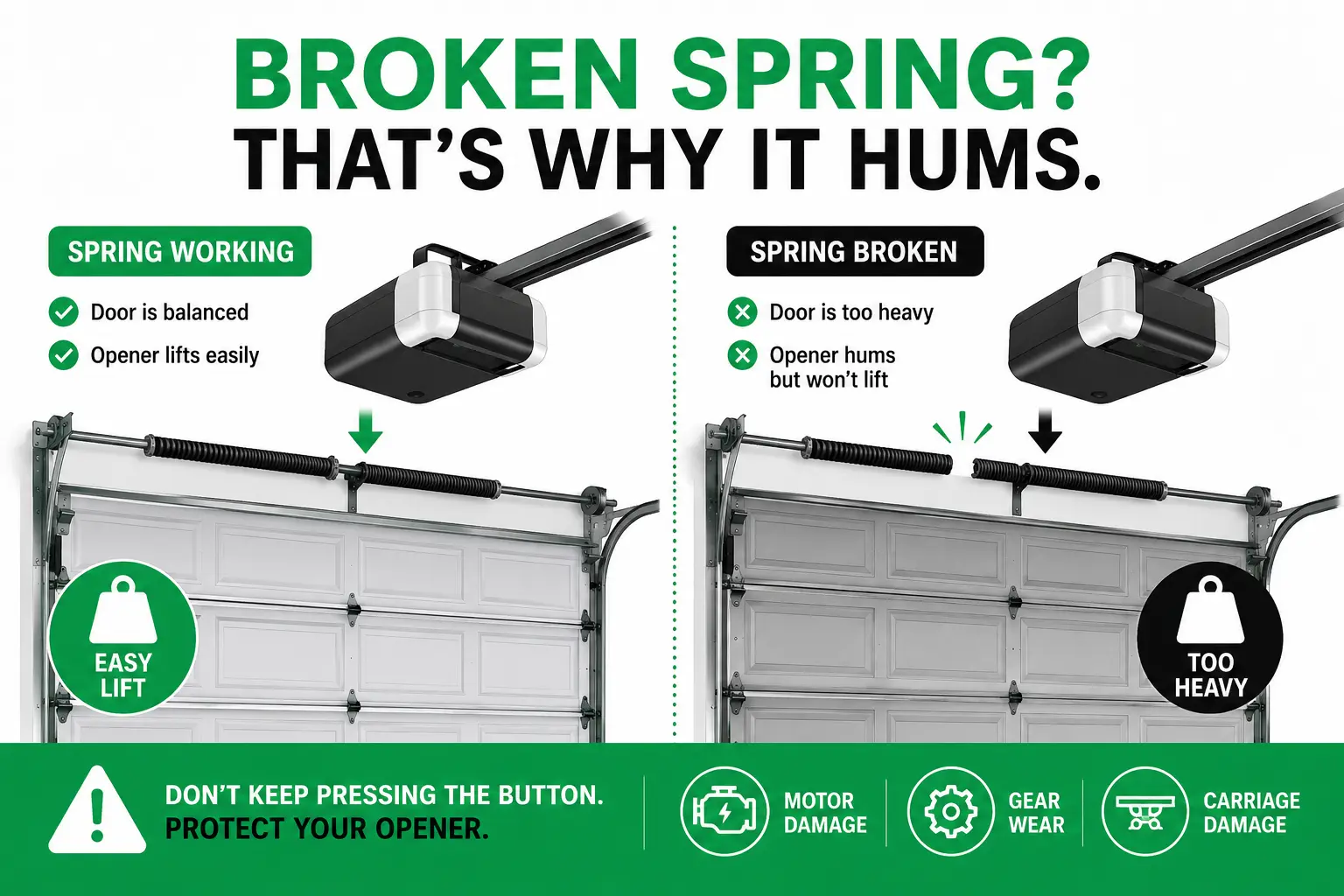
This connection trips up many homeowners because the spring and the opener feel like separate systems. But they’re not, at least not in practice.
The counterbalance mechanism supports most of the garage door’s weight, reducing the force required by the opener. A residential opener can typically handle 300–400 pounds in a balanced system, but it is not intended to lift a full-weight door without assistance.
When a spring breaks, the opener suddenly faces the door’s full, unassisted weight. It hums, strains, and either stops moving the door entirely or lifts it only a few inches before the motor gives up.
Forcing the opener repeatedly in this state can burn out the motor, strip the gear, or damage the carriage, turning a garage door spring replacement into a full opener repair or replacement. This is exactly why “don’t keep pressing the button” isn’t generic advice; it’s specific protection for your equipment and the door’s counterbalance system.
Humming vs. Grinding vs. Clicking: Does the Sound Type Matter?
Yes, but only as a starting point. Different sounds hint at different locations for the problem.
A steady hum with no movement often indicates the motor is energized but unable to drive the system, either due to mechanical resistance or a capacitor failure.
A grinding hum suggests the motor is turning, but something in the gear or drive assembly is skipping or stripping.
A click followed by a hum or a click with no movement at all can point to a control board issue, a limit switch fault, or a wiring problem.
Squealing, scraping, or popping sounds that accompany the hum are more likely to originate from the door itself, rollers, tracks, hinges, or springs rather than the opener.
That said, sound alone is not a reliable diagnosis. The same grinding noise can come from a stripped gear or from a door that’s torquing the drive assembly because the garage door counterbalance system is out of balance.
Should You Repair the Opener or Replace It?
This is genuinely situation-specific, and anyone who answers it without inspecting the door and the opener isn’t giving you useful advice.
Repair tends to make sense when the problem is limited to a single serviceable part, a gear, a capacitor, a circuit board, a trolley, and the rest of the system is in solid condition. If the door is balanced, the counterbalance system is in good condition, and the opener has been reliable
Replacement becomes the better option when the motor itself is failing, when the unit has had multiple issues in a short period, when parts are difficult to source, or when the opener is old enough that its safety features are outdated.
If you’re uncertain whether your current setup is appropriate for your door height and door type, especially if there’s been any conversion or modification, it’s worth reviewing what a properly configured high-lift garage door system looks like before assuming the opener is the problem.
Our guide on how to fix a broken garage door opener goes deeper into specific repair scenarios and helps you understand what a technician should be checking during an inspection.
When Is This an Emergency?
Call immediately if any of the following is true:
- The door is stuck open, and the space cannot be secured
- The door appears crooked, off-track, or one side is visibly lower than the other
- You smell burning, or the opener tripped a circuit breaker
- The opener is producing smoke or heat
- The door is moving unpredictably or without input
- You need urgent vehicle access, and the door is completely non-functional
In any of these situations, do not keep operating the opener. Step away from the door and call for service.
Why Working With a Local Specialist Matters Here
A humming opener is one of those problems where the wrong diagnosis leads to the wrong repair. If a technician replaces the opener without addressing an underlying spring or balance issue, the new unit will face the same problem the old one did.
The Door Guys have been serving Marion and the surrounding Central Ohio area since 1996. That experience means we check the complete system: opener, drive assembly, springs, cable drums, tracks, and door balance before making a recommendation. We don’t guess, and we don’t push replacements when a repair is the right call.
Frequently Asked Questions
Q.1 Why does my garage door opener hum but the door won’t move at all?
The motor is receiving power and attempting to run, but something is blocking movement. The issue could be a stripped drive gear, a disconnected trolley, a broken spring that’s made the door too heavy to lift, or a mechanical jam in the rail or track. A manual lift test (with the opener disconnected) will tell you whether the problem is in the door’s balance or inside the opener.
Q.2 Is it safe to keep pressing the button when the door won’t open?
No. Repeated operation while the drive system is jammed or the door is overloaded can overheat the motor, strip internal gears, or damage the carriage assembly. Press the button twice to confirm the problem, then stop and investigate.
Q.3 Will unplugging the LiftMaster and plugging it back in fix a humming issue?
Occasionally, a power cycle clears a minor control board glitch. But if the hum is caused by a mechanical problem, a worn gear, a disconnected trolley, or a heavy door, unplugging accomplishes nothing. If it hums again immediately after power is restored, you have a hardware issue that needs inspection.
Q.5 What does a broken counterbalance system have to do with the opener humming?
More than most people expect. The garage door’s balancing mechanism offsets the door’s weight so the opener only has to move a fraction of the load. When the torsion system fails, the door becomes too heavy for the opener. The motor hums and strains but can’t overcome the extra resistance. This is why the door should always be tested manually with the opener disconnected before any opener repair is attempted.
Q.6 How do I know if the problem is a capacitor or the motor itself?
A failing capacitor usually causes a hum at startup with no movement; the motor never gets enough starting torque. A failing motor may hum intermittently, overheat quickly, or produce a burning smell. Both require hands-on testing with a multimeter to confirm, which is why a professional inspection is the reliable path to the right answer.
Q.7 Can I reconnect the trolley myself if the emergency release was pulled?
If the door is fully closed and there’s no visible damage or tension issue, reconnecting the trolley is usually safe. Pull the release cord toward the door to re-engage. But if the door is partially open, appears crooked, or the counterbalance system shows signs of damage, do not attempt to reconnect it without professional help.
Need Garage Door Opener Service in Marion or the Surrounding Area?
A humming opener is not a problem that fixes itself. Whether the issue is inside the unit or in the door’s counterbalance system, the right diagnosis comes from inspecting both, not just one.
The Door Guys have been helping Central Ohio homeowners with garage door problems since 1996. Our local garage door specialists inspect the full system and explain what they find before recommending any repair. Book an appointment or call us directly at (740) 383-1234.